Southbury is taking its first concrete step toward determining whether a vacant building at the Southbury Training School can be converted into affordable housing, with the state picking up the tab for the complete cost – $65,100 – of a feasibility study.
The grant to fund the feasibility study has been approved by the Board of Finance at its August 19 special meeting, and the Board of Selectmen is expected to consider awarding the study contract to Seymour-based O’Riordan Migani Architects LLC at its meeting Thursday.
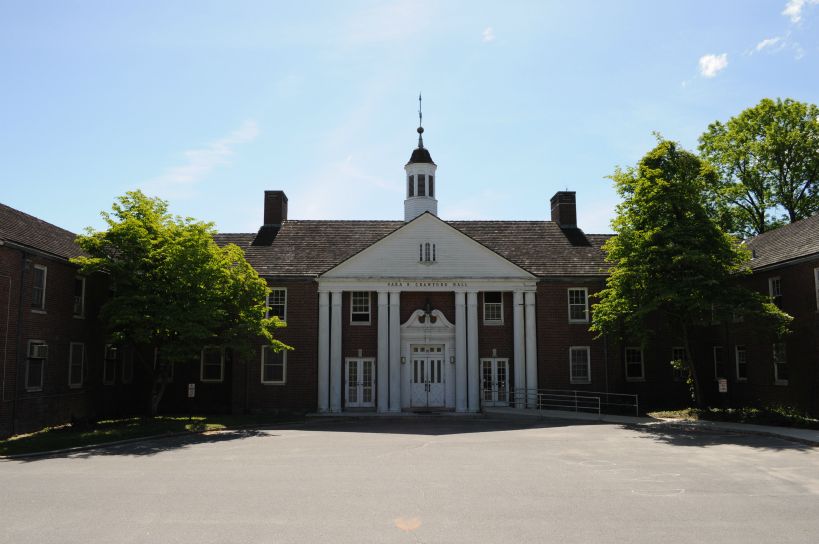
Sara B. Crawford Hall, a former residential building on the Southbury Training School campus, has been unoccupied for years. Following meetings and tours of the area with state officials, the state’s Department of Housing offered to fund the feasibility study as part of its effort to help Southbury explore potential affordable housing opportunities at the state-owned property.
The comprehensive feasibility study of the building would include a Property Condition Assessment, a Phase 1 Environmental Site Assessment, and a Hazardous Materials Review. The town received two bids for conducting the study, with O’Riordan Migani Architects (OMA) submitting the lowest bid of $65,100.

In an August 31 memo to the Board of Selectmen, the town’s Public Works Director states, “OMA has an extensive history with the development of housing projects for municipalities and housing authorities, as well as navigating state funding requirements.”
The study is not an approval to build housing, nor does accepting the grant commit the town to moving forward with any housing plans at Crawford Hall. Instead, it intends to answer the question of whether the aging building can realistically be converted into housing, and what that conversion would ultimately cost.
That distinction was a point of discussion when the Board of Finance considered the grant at their most recent meeting. Some members questioned whether accepting the state funding would obligate the town to pursue the project.
First Selectman Tim O’Neil and Finance Director Dan Colton reiterated the study’s sole purpose.
“We don’t have to do anything after that feasibility study,” said Colton.
O’Neil added, “This is basically 100 percent funded by the state’s Department of Housing for whether or not it’s appropriate to put affordable housing in this building.”
The study is expected to provide the town with a better understanding of the building’s physical condition and whether there are any environmental or hazardous material concerns, as well as the preliminary costs of converting the building into residential units.
If the study does come back favorably, the next steps would be in the hands of the Board of Selectmen to decide what they want to do with it, with the funding mechanism being referred to the Board of Finance. In either case, the town could abandon the idea at any time.
Before the Board of Finance entertained a vote to accept the state-funded grant, some members requested that there be public information sessions about the financial side of any potential project.
“I would vote yes at this stage, assuming [First Selectman O’Neil] is absolutely committed to having at least one public meeting about the eventual impact of the economics to Southbury taxpayers,” said John Michaels, longtime chair of the Board of Finance.
O’Neil confirmed his commitment to public meetings, pointing to the town’s Affordable Housing Subcommittee playing a role in helping educate residents about any potential projects.

How Crawford Hall Entered the Conversation
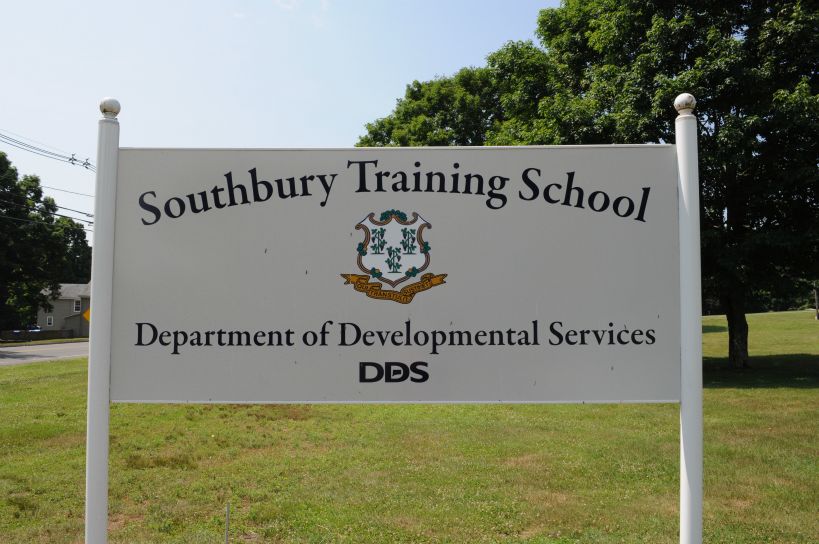
The possibility of using Crawford Hall for housing emerged from a broader effort by the town and state to explore what could happen to portions of the Southbury Training School property.
Earlier this year, O’Neil and other town officials met with representatives from the state, including the Department of Housing and the Office of Policy and Management, to discuss potential affordable housing opportunities at the state-owned campus.
During a mid-April visit, state housing officials toured the Southbury Training School and identified Crawford Hall as one building that could potentially be used for housing.
There had also been discussions about offering the Region 15 School District a 45-acre Personnel Village area of the training school for a potential elementary school site – a proposal that did not move forward.
O’Neil said he had also asked the state to consider transferring other buildings at the training school to the town.
“I tried to get the state to convey Thompson Hall, another beautiful, brick building that was used by the state for personnel,” said O’Neil. “They didn’t want to convey that property to the town because of all the heating pipes and everything else that goes directly under that house. They pointed to Sara Crawford Hall and offered up the feasibility study paid for 100 percent.”
In his remarks to the Board of Finance, O’Neil expressed that getting affordable housing in town is one of his main goals, stating it’s a “great need” that could benefit a number of people.
When adopting the town’s Affordable Housing Plan in 2022, it was determined that just under 1.5 percent of Southbury’s total housing units were deemed affordable under the state’s definition, well below the 10 percent statewide goal set by the Connecticut General Statute 8-30g for each city and town.
Some Finance Board members weighed what future costs could be down the line if a future affordable housing project were to be decided for the Southbury Training School, including potential impacts on the school district’s budget and property taxes.
In response to some of the reservations made by some Board of Finance members, O’Neil added, “I know there are plenty of people on this commission that it’s not a goal of theirs, and they’re going to try to prevent it from happening, but I’m in control of it.”
Gerry Leventhal, an alternate member of the Board of Finance, agreed that the town should be seeking more opportunities for affordable housing.
“If there’s a commitment from the town to try to get more affordable housing… then I hope this is one of a few projects we look at to try and satisfy the need,” said Leventhal.
O’Neil went on to express the importance of having discussions about the future of the Southbury Training School, floating ideas about cultural arts or continuing with some sort of mental health facility on its grounds.
“We can’t just sit back and not have a conversation about what the future of the Southbury Training School is going to be,” said O’Neil.
The State’s Role
While the town is considering what Crawford Hall could become, state officials say any redevelopment of the property must be balanced with the continued operation of the Southbury Training School and the needs of its residents.
Paul Hinsch of the state’s Office of Policy and Management participated in the tour of the property and later told the Record that the preliminary discussions grew out of the town’s eagerness to begin talking about the future of the property.
“Our main objective there is to allow the clients to live there peacefully and not be disrupted,” Hinsch told the Record, while stating that there are portions of the property that could potentially be repurposed.
“We own it, but we really, in many ways, don’t control its destiny at all, but we’re there to help out the town,” he added.
He characterized the discussions with Southbury as a partnership between the town and the state, rather than an effort by the state to dictate what should happen with the property.
“We’re not looking to shove anything down anyone’s throat, that we want to all of a sudden just do a bunch of housing,” said Hinsch. “But, hopefully, it’ll all work out. We can maybe save a building, and it’s the start of doing some other [buildings] there.”
For Crawford Hall, Hinsch said the building is not large enough to accommodate hundreds of units, and that the feasibility study would help determine how many units, if any, could realistically fit into the existing structure. Hinsch also said state funding could potentially be available for remediation if the feasibility study identifies work that needs to be done.
“I think it’s a great example of trying to move things forward, and we appreciate, certainly, the town’s passion for it,” said Hinsch. “I would say that a lot of what we did in meeting quickly, twice over a short period of time, is the First Selectman’s passion for it.”
What Comes Next
For now, the town does not have answers to some of the most consequential questions surrounding a potential housing project at Crawford Hall.
While the feasibility study is expected to provide some clarity based on an initial assessment of what could be done with the building and at what cost, the town would still have to determine what type of project it wants to pursue, how it would be financed, and who would ultimately own and operate the property.
It has also not yet been determined what percentage of units would be designated for affordable housing, or whether a future request for proposals would be issued to a for-profit company or non-profit organization.
“There’s just way too many scenarios at this point,” said O’Neil.
In preparation for future public meetings and forums about the topic, O’Neil has started to meet regularly with members of the Affordable Housing Subcommittee. The subcommittee of the Planning Commission met on Tuesday, September 1, and discussed how a potential collaboration with the Naugatuck Valley Council of Governments (NVCOG) could assist in its role to help educate residents.
“Education is probably our biggest opportunity,” said Dominick Fatibene, a member of the town’s Zoning Commission and chair of the Affordable Housing Subcommittee.
For now, however, the town’s plan remains dependent on what the feasibility study finds.
As Colton told the Board of Finance, “This discussion is meaningless if the feasibility study comes back and says we can’t do anything.”
The study is expected to provide that answer and give an initial, detailed view of whether Crawford Hall could have a new life as housing.
The Board of Selectmen next meets on Thursday, September 3, at 7:00 p.m. at Town Hall.
By Evan Triantafilidis