SOUTHBURY/MIDDLEBURY – What began as a plan to replace a pair of aging school roofs has grown into a district-wide question about timing, cost, and long-term planning.
Region 15 officials are asking voters to support a plan addressing both Gainfield Elementary (GES) and Pomperaug Elementary (PES) schools, centered on new construction at both schools on their existing sites.
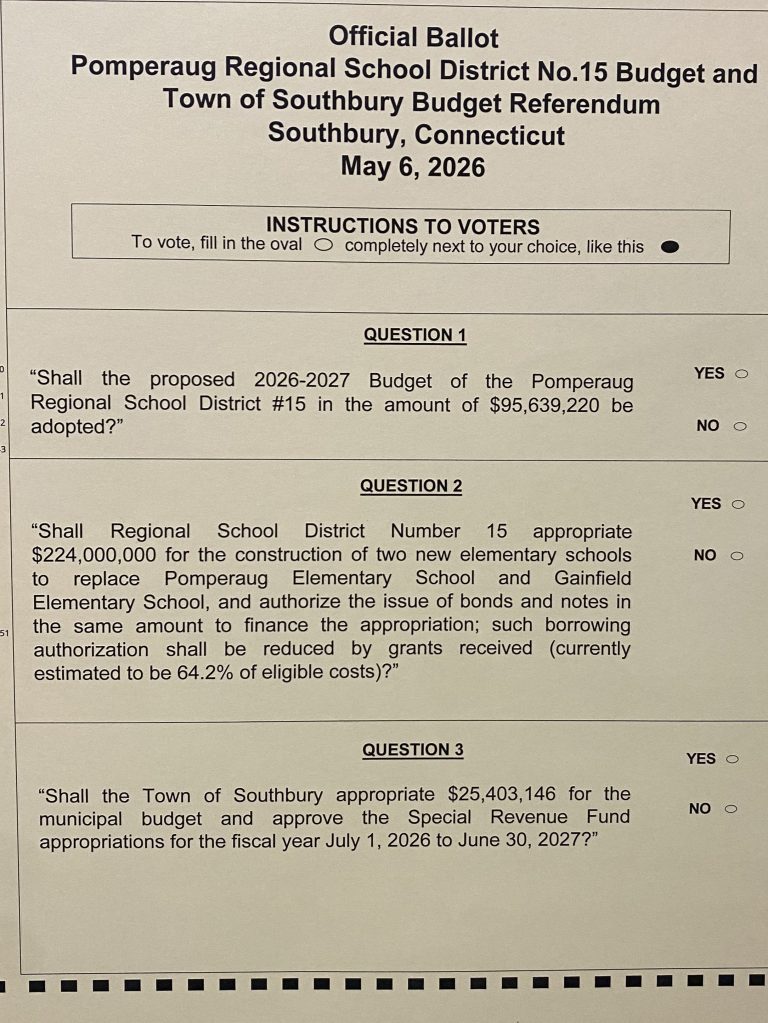
The referendum vote, to be held on Wednesday, May 6, will officially pose a $224 million question – separate from the district’s annual budget, as well as Southbury and Middlebury’s respective municipal budget questions. An expected 64.2% reimbursement rate for the project could be a limited-time deal for the cost that is already split roughly two-thirds to one-third to residents of both towns.
What has been an official two-year process leading up to this moment has been a conversation for well over a decade. School officials and supporters say the time to act is now, pointing to timely state incentives behind the sticker shock and acknowledging a can kicked too far down the road.
The road now reaches a decision point next week, with voters having the final say.
Voting in Southbury will be held at the Firehouse, located at 461 Main Street South, from 6:00 a.m. to 8:00 p.m.
Voting in Middlebury will be held at the Shepardson Community Center at 1172 Whittemore Road, from 6:00 a.m. to 8:00 p.m.
What The Proposal Includes
The Region 15 Board of Education is proposing an overhaul of the district’s two oldest schools, located about a mile away from each other in Southbury.
The current plan calls for new construction on existing district-owned sites, utilizing space not within the current buildings’ footprint.
It could take 18 to 24 months until the simultaneous projects are complete. If started in 2028, the projects could potentially be ready by fall 2030.
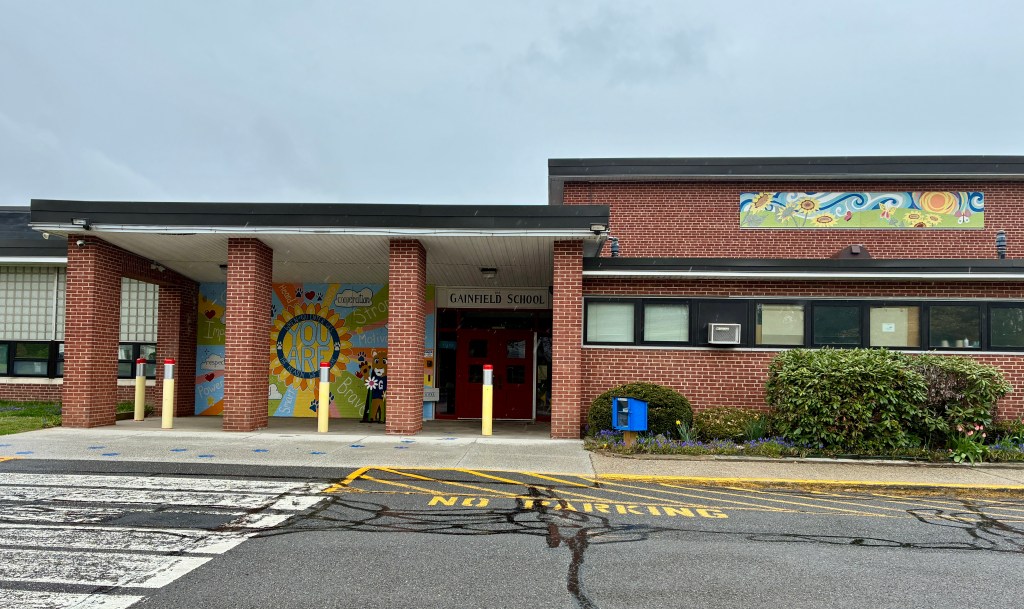
For Gainfield, the district’s oldest school, built in 1941, construction on a two-story school won’t begin until a new sewer line is installed and the existing septic tank and field are decommissioned.
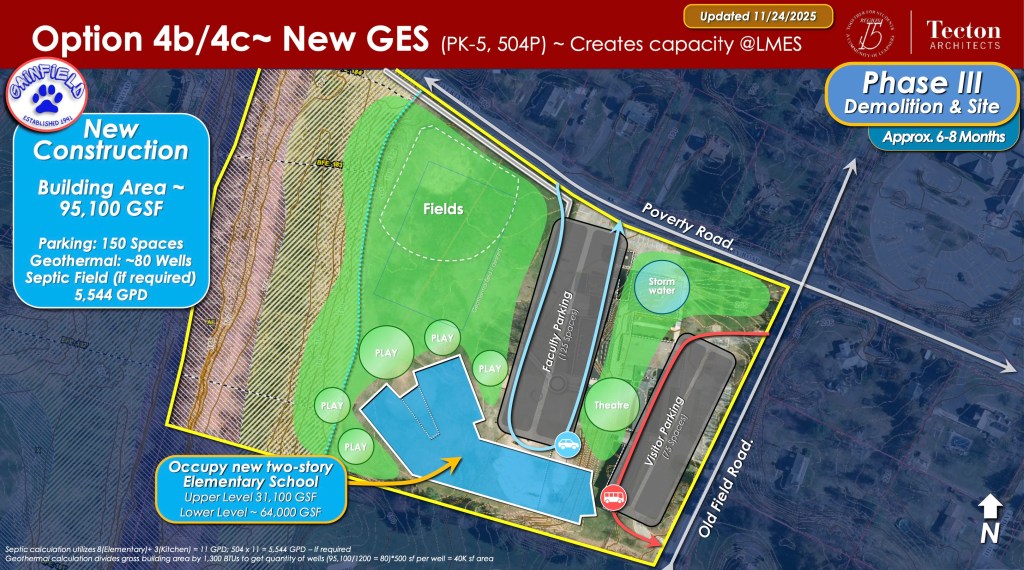
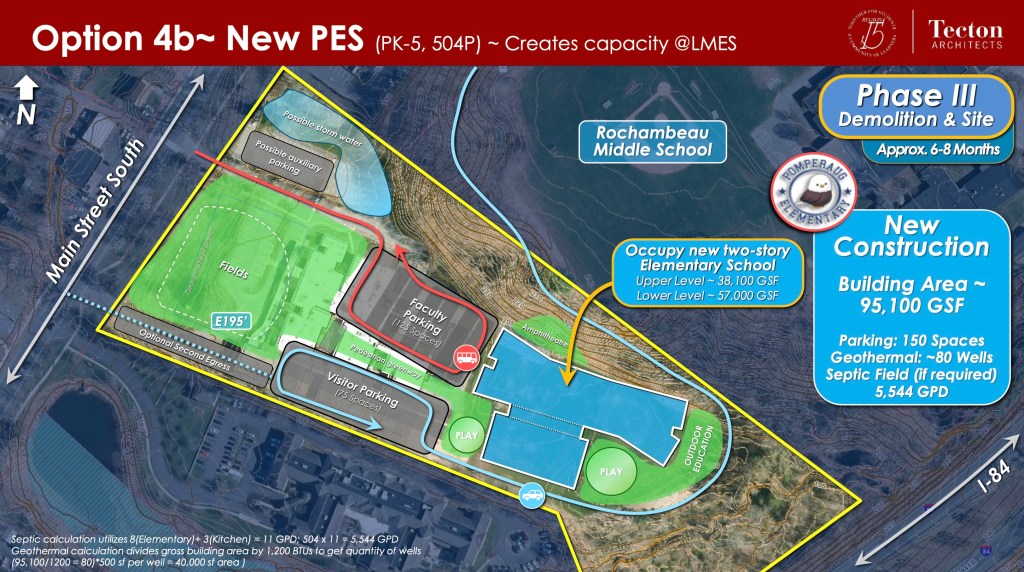
Demolition of the original buildings at both sites would make way for increased parking and improved traffic flow to accompany their potential 95,000-gsf buildings, the district’s plans show.
The plan for Pomperaug would be to build the new school further away from Main Street South, further back on the property, and closer to Interstate 84. Initial utility work would be needed, including building an access drive during construction that connects to Rochambeau Middle School.
The access road, priced between $1.2 and $1.5 million, could later be used for parent drop-off/pick-up to alleviate traffic that currently queues up along Main Street South.
Both plans call for dedicated spaces for expanded preschool, allowing the district to take advantage of additional reimbursement dollars, as well as relieving crowding at the pre-kindergarten (pre-K) programs at Long Meadow Elementary in Middlebury.
Breaking Down The Cost
The $224 million price tag comes with an expected 64.2% reimbursement rate, leaving about $78 million left for the local cost to taxpayers in both towns. That’s about a $40 million local cost for a new GES and about a $38 million local cost for a new PES.
The window of opportunity to potentially get the reimbursement figure locked in by July 1 of this year is one to take advantage of, says Region 15 Superintendent Josh Smith.
By incorporating pre-K into both projects, the school district qualifies for an additional 15 percent state incentive, effectively reducing the local share to roughly 35 cents on the dollar.
According to the school district’s estimates, based on a 30-year bond, the local impact on taxpayers would be approximately $7 to $14 per month for a typical household and approximately $2 to $4 per month for a typical Heritage Village condominium.
Smith, alongside Board of Education Chairperson Marion Manzo, called the potential passing of the referendum vote “the fiscally responsible thing to do.”
“We truly feel that we are acting in the best interest of Region 15 and our communities by tackling this now and the winds are such that we can maximize the amount of state reimbursement,” said Manzo when she took questions from the Southbury Board of Finance in March.
“The board is trying to do the right thing, and not kick the can down the road,” she said.
The plan has received both support and questions from the community, as district officials visit town halls and community groups to pitch the idea, explaining both what the project is and why it’s needed.
Support and Skepticism Emerge
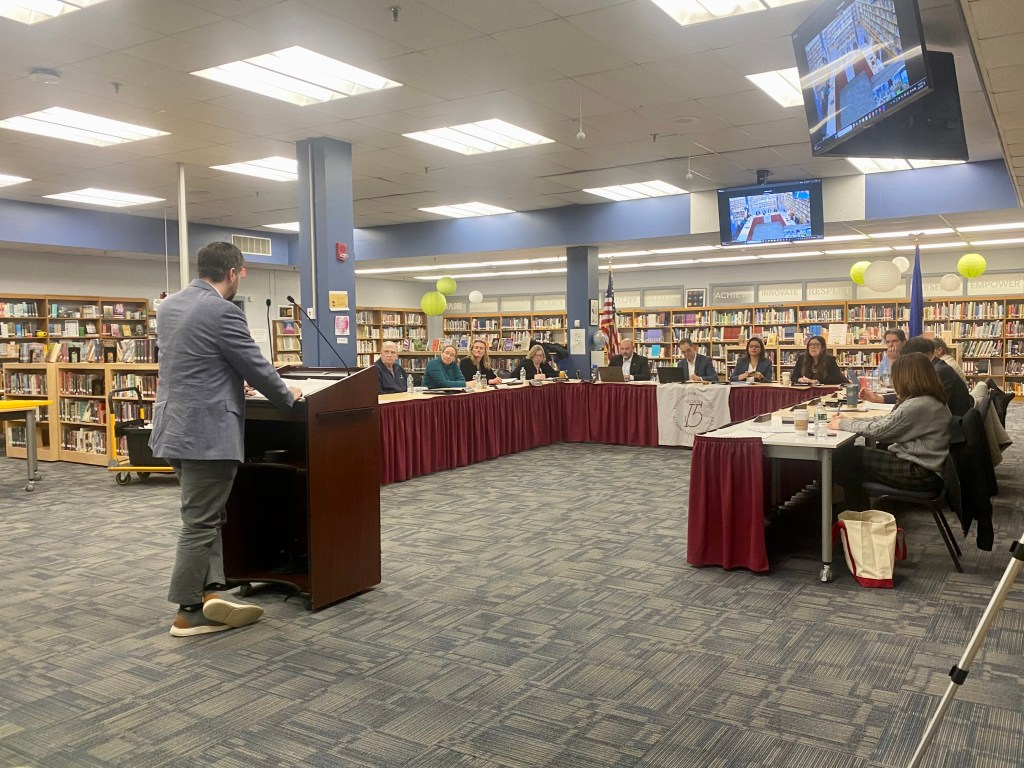
There haven’t been too many speakers for public comment during the Board of Education’s meetings so far this school year, but at least one parent spoke out directly in favor of the plan.
Jason Andrews, a parent of three, says that leaks pop up on a regular basis at PES. The seemingly little things over the year, he says, have added up.
Andrews spoke in favor of new construction, having been a member of the Feasibility Study Committee that the district commissioned in 2024, and which unanimously supported new construction over renovation.
“What I learned through being on the Feasibility Study Committee is, if we were to renovate, 20 or 30 percent would be a sunk cost that would bring no value to the school district,” said Andrews. “It wouldn’t fix the fundamental issues at the schools.”
He’s also the public face of Region 15 K.I.D.S Alliance – a group created this year to support the investment in safe and modern school facilities that meet the needs of the district’s learners.
As students could experience being right next to an active construction site, if passed, Andrews says that the district is looking closely at how to turn any potential disruption into an opportunity for learning.
“They’ve got a really good plan in place to enable these schools to be built in a way that integrates with the learning experience rather than interrupt it,” said Andrews.
“Kicking the can down the road only increases the cost to taxpayers,” he added.
For residents like Colette Baptiste-Mombo, who has been in Southbury for 22 years, there’s a concern for her neighbors and an already high cost of living being raised again.
She has put her two daughters through Region 15 schools for elementary and high school, and says there is still too much of an unknown to move forward with the plan.
“Sometimes we don’t look before we leap,” she said, suggesting there might be simpler adjustments and repairs to look into for the elementary schools. “Perhaps we need to slow down and weigh other options and know what we’re getting ourselves into.”
Either way, pass or fail, she says she will support the community’s decision.
The district’s PTO Advisory, composed of all seven schools in Region 15, issued a statement in support of the Board of Education’s proposal, calling the plan a “vital step forward” as both schools continue to age while maintenance and construction costs escalate.
“Short-term repairs are often ‘band-aid’ fixes that add up quickly while missing the opportunity to leverage significant state funding available today,” the PTO Advisory statement reads. “Delaying this decision doesn’t avoid costs, it compounds them while reducing our available state support. By addressing our oldest schools in most need of repair now, the district can more effectively share and manage remaining resources across all seven schools in the future.”
By seeking a 64% state reimbursement rate, “this proposal effectively returns our tax dollars to the community,” the statement continues. “Beyond the numbers, this project improves traffic flow, expands preschool opportunities, and alleviates enrollment pressures across the entire district. This is a fiscally responsible, long-term investment shaped by a transparent process involving district leadership, municipal leaders, and parent representatives. We believe this is the most intentional way to ensure predictable budgeting and modern facilities for all our students.”
How We Got Here
Following the creation of the Feasibility Study Committee, the Hartford-based construction company Tecton Architects was brought on to help guide the process. The committee ultimately recommended to the full Board of Education a series of recommendations, including a combined school option, and what followed was a thorough review of potential sites that could accommodate such a project.
Each option came with trade-offs, ranging from cost and construction timelines to redistricting impacts and site limitations.
Over time and following the land search, district officials were led to their current plan after considering the cost comparisons between renovation and new construction, and the availability of state reimbursement.
The district says the opportunity to have a reimbursement rate at the proposed level of 64 percent is rare and that there are efficiencies in replacing both schools at the same time.
There’s also the region-wide consensus that while GES is the older of the two buildings, it has “weathered time” better than PES, which was built in 1967.
Inside The Schools: Current Conditions
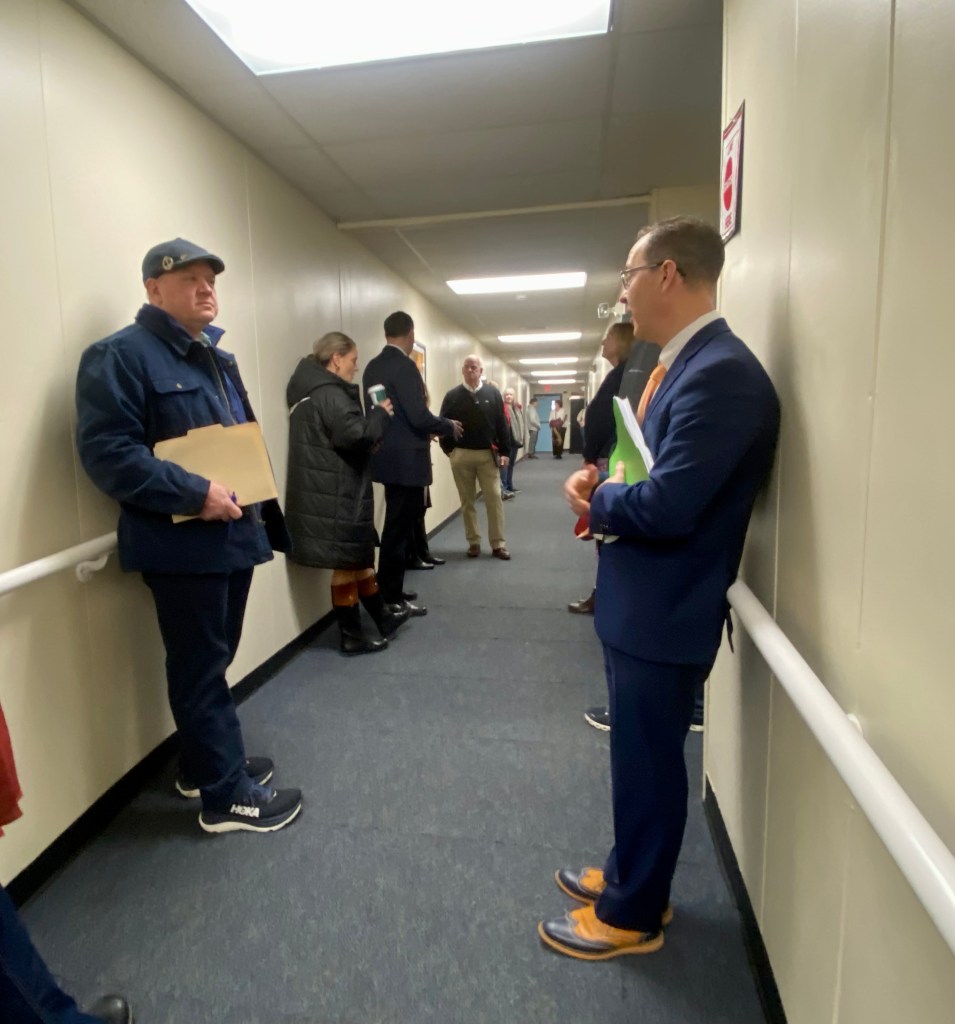
A tour of both buildings by local elected officials served as a first-hand look into how the district is operating under current conditions.
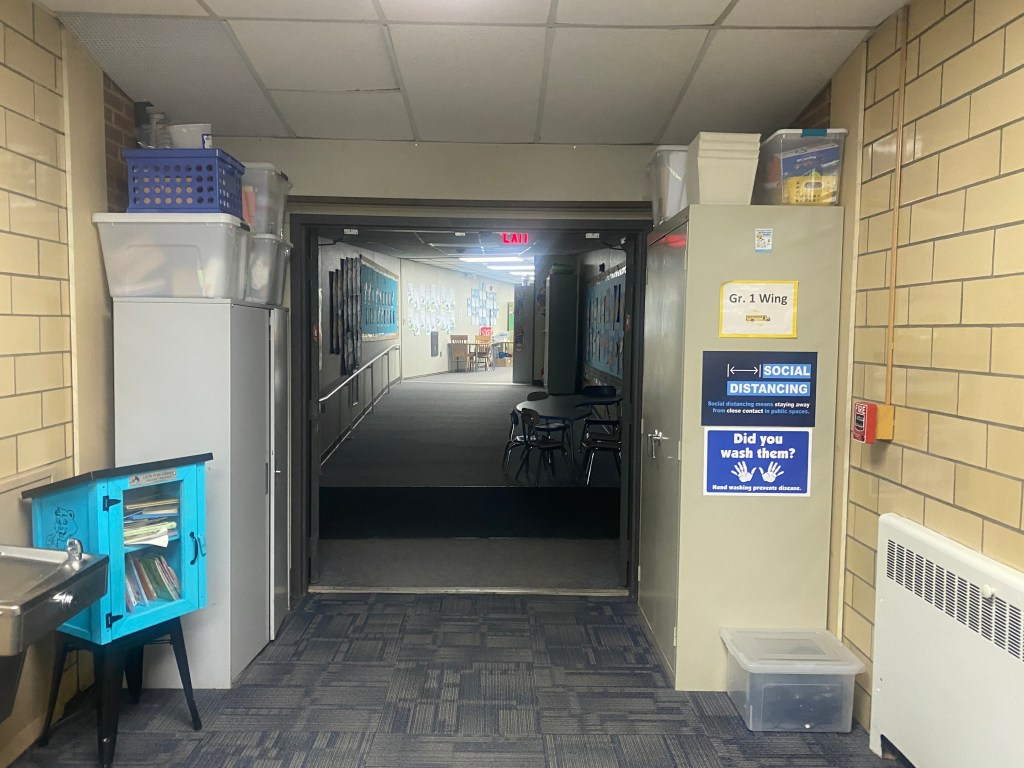
The portable classrooms of GES were built 30 years ago, and their hallways are crammed and cold.
A teacher is working with a student at a table that spills into the hallway just outside a classroom. In winter, their jackets come on.
The 85-year-old building has its challenges, but one that stood out to many on the tours was that the building is not handicap-accessible.
GES Principal Jon Romeo says it leads to tough conversations: “If you have any type of mobile disability, you cannot come to Gainfield. Even if you are districted for Gainfield, or your friends are here, you’ll have to go to Pomperaug,” he says. “That’s really challenging for us.”
There have been instances, he adds, where families have been split, with one child at GES and the other at PES, due to accessibility issues.
In addition to being pressed for both utility and office space, windowless rooms that were once closets now serve as offices for the school’s interventionist.
“We try to use every available piece of real estate to get kids what they need,” says Romeo, opening the door to a school interventionist’s office. “This was once a storage closet, now it’s Sue’s office.”
For Middlebury First Selectwoman Jennifer Mahr, the lack of ADA compliance and hearing stories of relatives who couldn’t access their child’s classroom for parent-teacher conferences stuck with her.
Structurally, she’s right when she says “there’s no fix for that”.
Architecture being one of the biggest weaknesses at GES, an elevator is not going to be installed any time soon.
“The building needs a new roof, do you put a new roof on an aging noncompliant building?” she says. “I think we’re at the point of needing to build two new schools.”
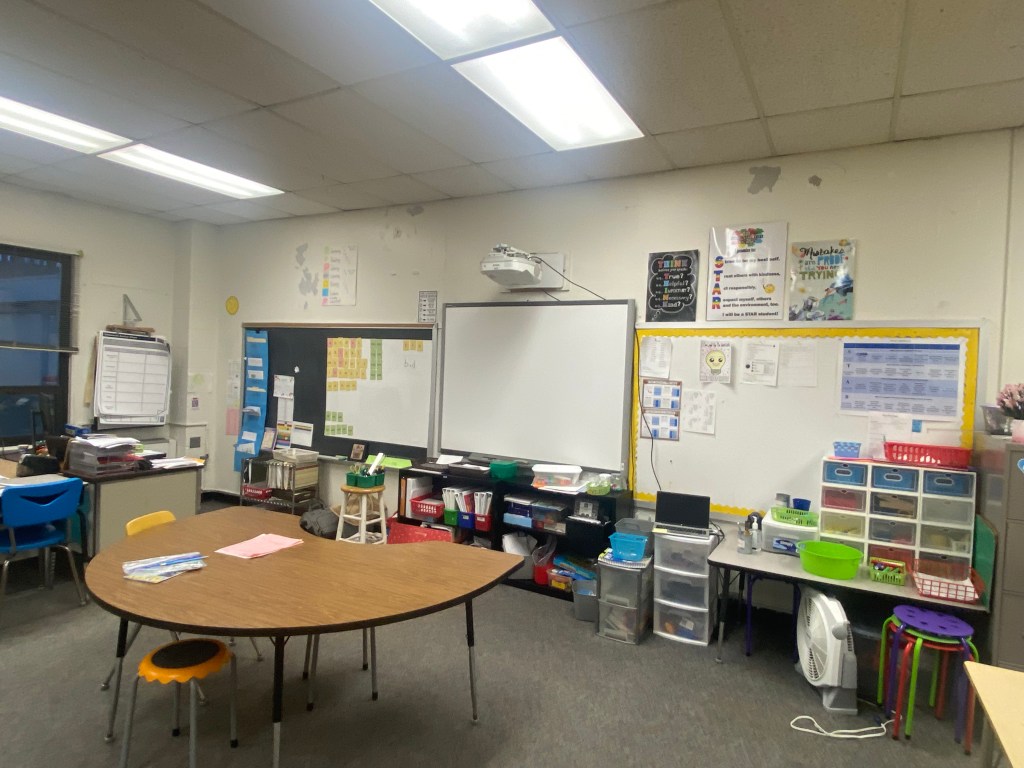
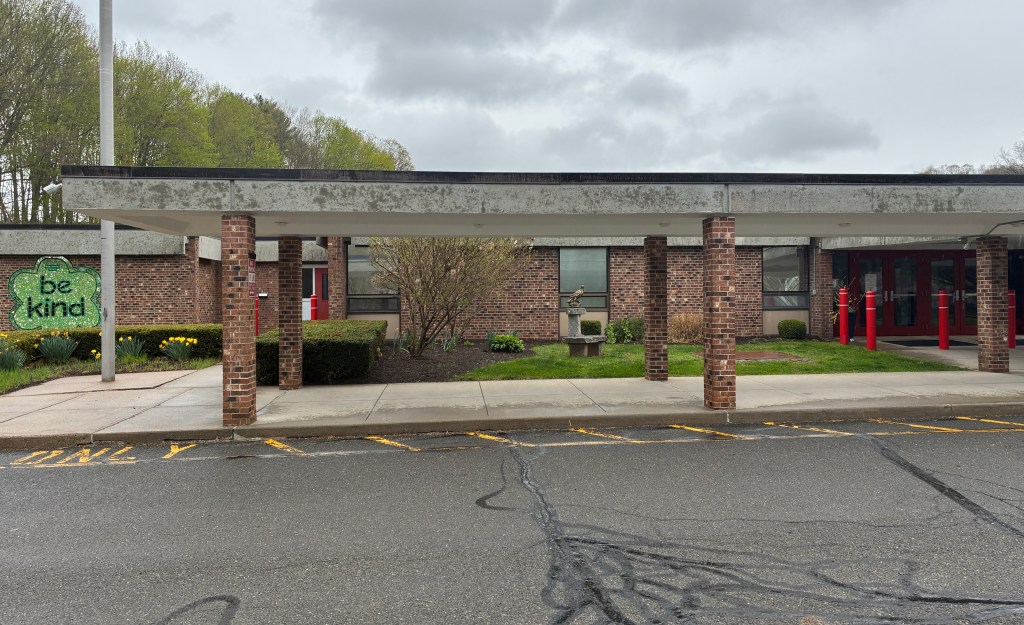
At Pomperaug, low ceiling heights greet you before anyone in the main office can. There are layout inefficiencies, the district says, and a communal space not big enough to hold entire school assemblies.
Posters are strategically hung in classrooms to cover up cracks in the wall.
Then there’s the local traffic, where afternoon dismissals feature lines of cars; for PES, that means added congestion to Main Street South.
It’s an issue that Southbury First Selectman Tim O’Neil doesn’t think will go away with the proposed plan to build a new PES on its existing site.
Instead, O’Neil says he offered the Board of Education a state-owned piece of property at the Southbury Training School, also known as Personnel Village, for the purpose of building a school there.
“I personally think it would be the best site for this [PES] because it would take the traffic off of Main Street,” he said.
O’Neil says the idea came with the vision of purchasing PES from the school district, and turning it into senior housing or a senior center.
“I do realize that both of the schools need to be rehabbed or rebuilt, but this isn’t the best site for Southbury,” said O’Neil, who added that he was pleasantly surprised at how Gainfield has held up over the years, while also noting its accessibility challenges.
The First Selectman’s offer came as he got involved with the preservation of a town-owned property the Board of Education was looking at, located at 415 Roxbury Road.
In addition to a circulated online petition started by another resident, the Roxbury Road property was essentially taken off the table for consideration by O’Neil, who had only been in office since December.
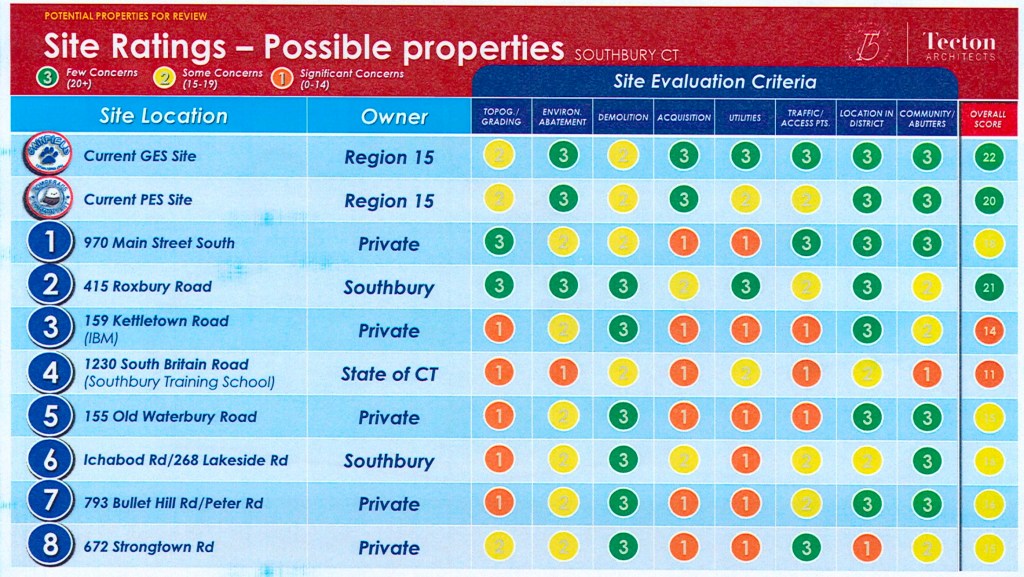
Tecton Architects was tasked with rating a handful of selected site possibilities based on criteria such as topographical and acquisition challenges, access to utilities, and overall location within the district.
The site at the Southbury Training School received the lowest site rating (11 out of a possible score of 24) among those looked at, ranking as a property with significant concerns. On the other end of the spectrum, the Roxbury Road property ranked highly (21/24) among the other properties.
The Board of Education ended up without further looking at the Roxbury Road property, and the piece of land was subsequently put on the agenda for Southbury’s Rural Preservation Advisory Committee for its past few meetings.
The board did not take up the First Selectman’s offer, with Chairman Manzo noting a potential school at the Southbury Training School property would be right next to an active cemetery.
“That’s wonderful history,” O’Neil said.
For some board members, including Manzo, the idea of an elementary school next to an active cemetery was the final “nail in the coffin” for an idea that could already put them behind schedule in trying to acquire it, and one that posed a limited buildable area due to wetlands and waterways.
Board of Education member Heather Rodgers argued that pulling PES farther from the center of town would be counterproductive from a safety and community standpoint. Fellow board member Dr. Sally Romano noted that there wasn’t enough room for fields after Tecton took a second look at the property.
The plan moved on.
The Price is Right … Now
As district officials made their case at different speaking opportunities around the two towns, there was a sense of urgency to reap the benefits of state reimbursement this time around.
Some members of the town’s’ Board of Finance pose questions like, why not stagger the two projects? To this, district officials and Tecton point to other communities in the state who are pursuing similar projects and question how long the additional reimbursement money will be around.
Jeff Wyszynski from Tecton says there was a perceived intent from the state to promote pre-K development in school districts, and that the financial incentives to incorporate them into new school construction may not last forever.
“This will be the first year that these applications go in requesting that additional 15 percent,” said Wyszynski. “This will be a good indicator as to how aggressive communities are going to be. But I can tell you that there’s several out there looking at this.”
Additionally, the state is finalizing new legislation that would cap state reimbursement at $494 per square foot, compared to the proposed building costs of just above $600 per square foot, which could put the project’s overall reimbursement rate at risk of falling and leave local taxpayers on the hook for the difference.
That legislation, combined with the uncertainty of how long the pre-K additional reimbursement money will be available, would impact the district’s plans if the project is pushed further down the road, says Superintendent Smith.
What’s Next
Pass or fail, there are plans to prepare the grant application before the July 1 deadline.
If the referendum vote fails, Smith says, submitting the application preserves the ability to have future conversations about what the board would want to do next – whether that’s modifying plans or another referendum attempt.
A successful referendum would ultimately be required for an approved application, but a grant application submitted by the upcoming deadline would effectively solidify the district’s application under current existing legislation.
Whatever happens, the buildings continue to age, and Smith says the issues at both schools will need to be addressed in some form.
Smith is in the unique position of having attended both schools growing up and now overseeing the process evolve from a roof study to a decision that could define what kind of community Region 15 leaves behind for the next generation.
“It’s an opportunity .. if I’m going to leave things better than I found them,” said Smith.
By Evan Triantafilidis
Previous Record Coverage: