Ken Korsu found himself in the middle of a rice paddy field in Vietnam when the enemy started opening fire with machine guns.
Artillery rounds whizzed by. One of the rounds clipped his leg.
It’s one of the many moments he says he may have escaped death while serving in the 101st Airborne Division.
From surviving a near-fatal bout with malaria, to a satchel charge attack while in his hospital bed, there isn’t a day that goes by for the Southbury resident that he doesn’t think about the sacrifices and brotherhood made during those times of war.
“I made it my job to keep my guys safe, to bring them home,” said the former officer. “I was mostly successful.”
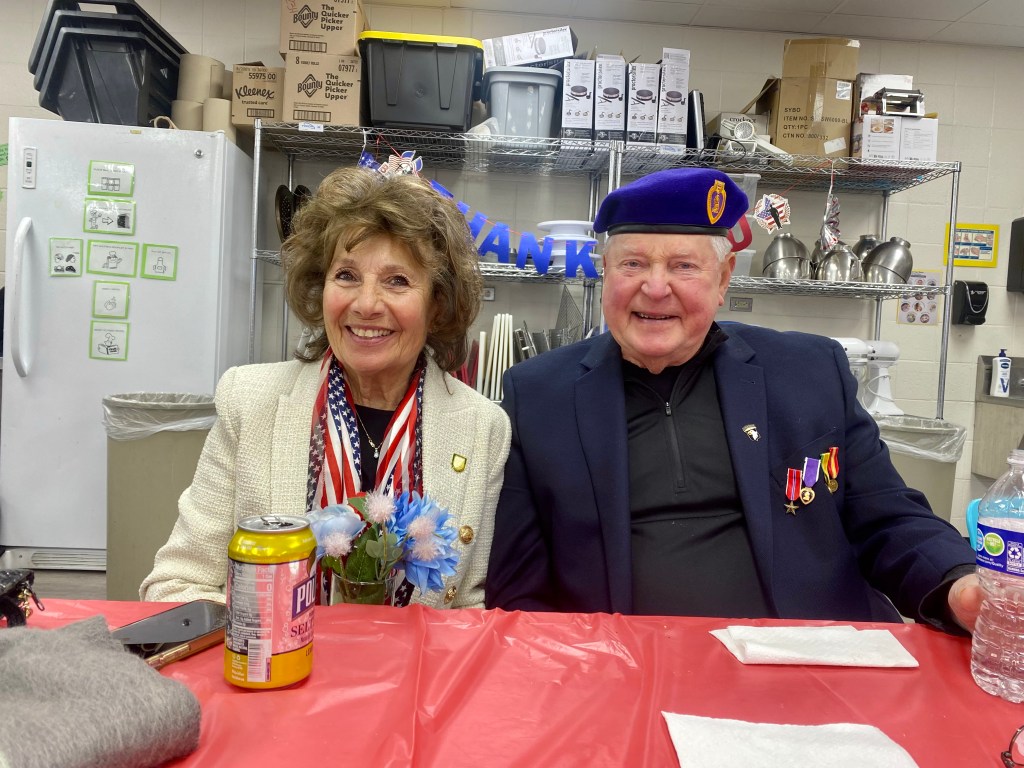
In his early 20s and during the mid-1960s, Korsu ran an artillery battery, overseeing units that fired off 1,000 rounds a day.
Their job was to eliminate the enemy, and Korsu says they were very good at their jobs.
From the unshakable memories of weeks-long search and destroy missions, to the thoughts of “why are we here?”, the Purple Heart recipient reflected on the conflict some 60 years later.
“The sad thing about the war is, you got a bunch of people trying to kill each other, and they don’t know the other side,” said Korsu.
“I am so lucky to be here. I was wounded a couple of times, but there were other times where I don’t know how I got through it,” says Korsu, before looking up.
Today, Korsu’s memories remain, but with a much different backdrop.
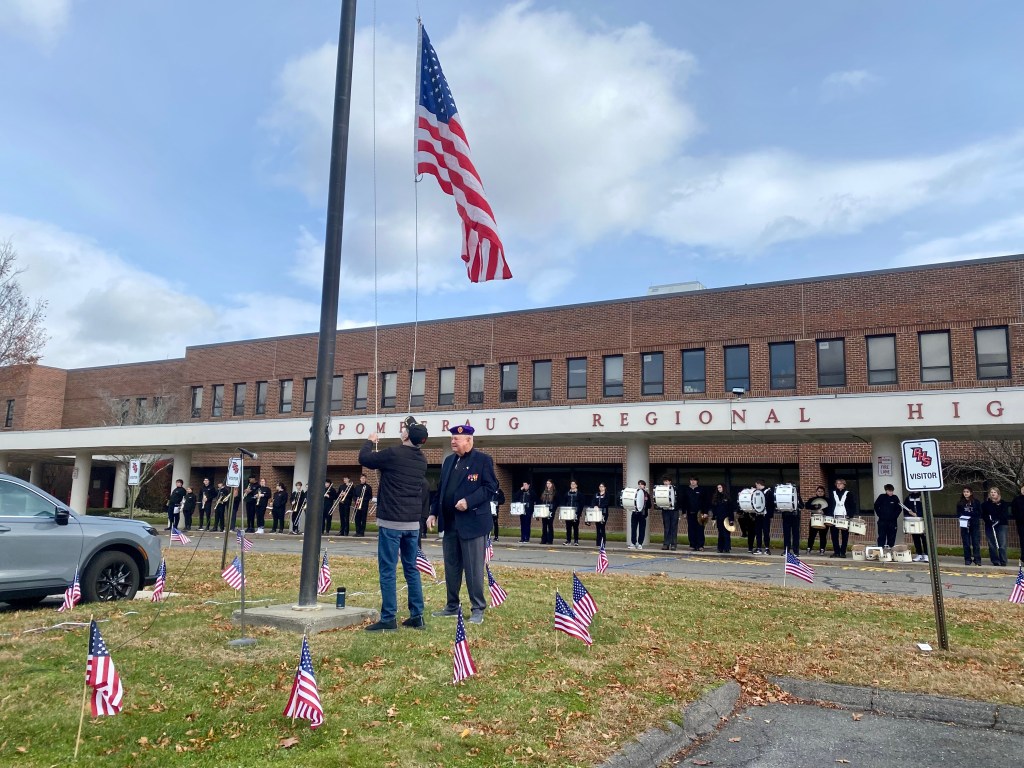
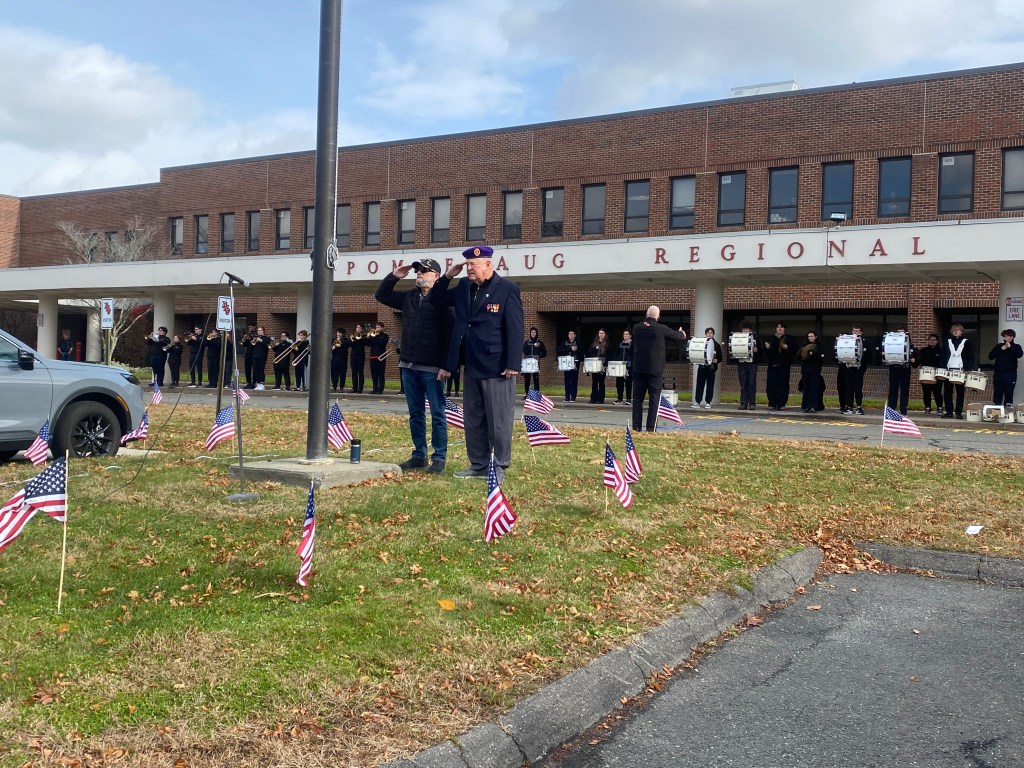
This morning, on the grounds of Pomperaug High School, Korsu was joined by other familiar faces of local veterans and flanked by the school’s marching band. He helped raise the flag and sent a message to students.
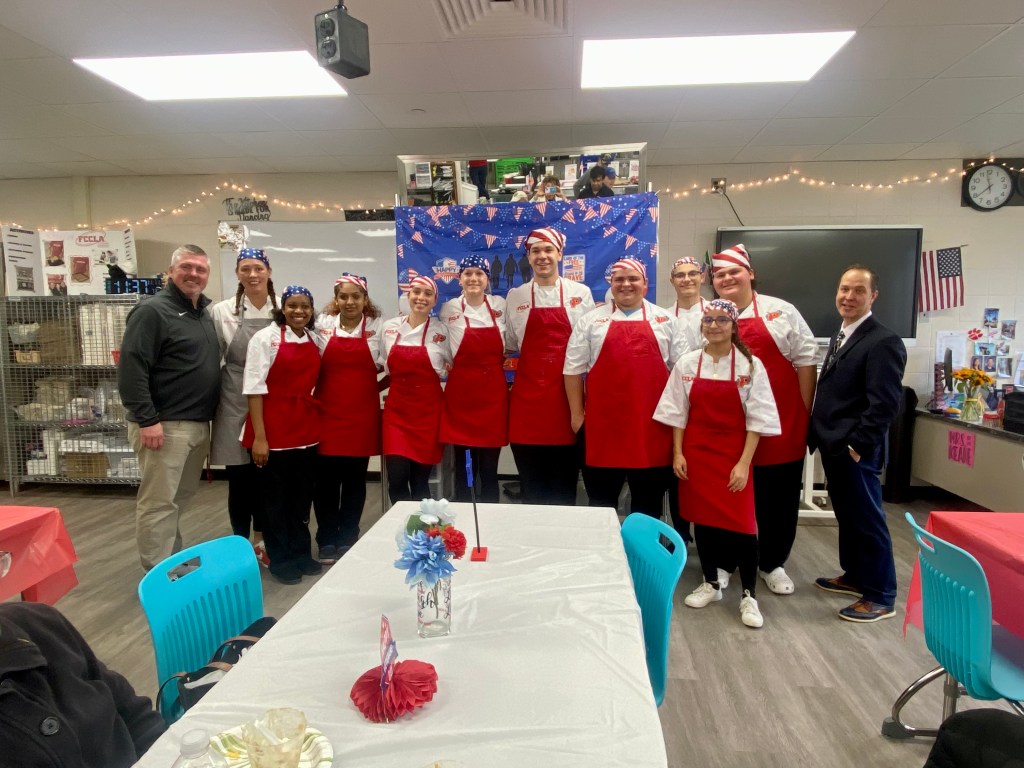
Inside, the school’s culinary program prepared a variety of snacks for those who had served the country.
For Rachel Dryden, a boot camp assignment in Arlington, Virginia, stationed just across from the Arlington National Cemetery, brought back memories of what life was like back home during the Vietnam War.
“During that time, they were burying soldiers left and right,” said Dryden. “That’s all we would see, and the 21-gun salute.”
Asked what they would like the younger generation to know, both Korsu and Dryden echoed the same message of sacrifice.
Korsu’s spouse, Mary, said, “We hope that the rest of the country sees that it was a sacrifice for them to leave their jobs and families…to keep America safe. And to make sure our younger generation knows that freedom isn’t free.”



 The Southbury Record