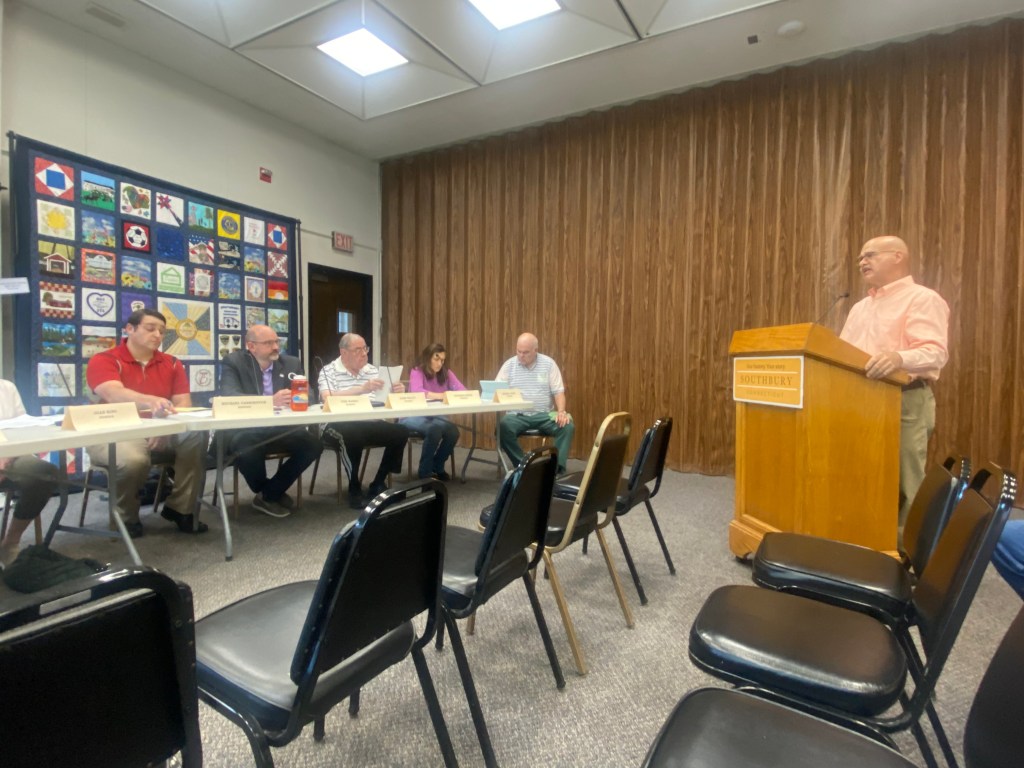
A longer term for the First Selectman. A merged Planning and Zoning Commission. A new path for rewriting how Southbury handles its budget.
Those are some of the changes on the table for the Town Charter – the living document which provides a blueprint for how Southbury operates.
A year-long process will enter its home stretch as the Board of Selectmen will hold a public hearing on Tuesday, July 7, to hear any comments about the proposed edits. The opportunity to propose changes to the charter comes around once every five years, in accordance with state law.
At a later date, the board will give their final approval or rejection of which charter amendments appear on the ballot, and voters will ultimately have the final say in November.
Some proposed edits are technical. Others could reshape future local elections. And there are some ideas that didn’t make the cut, like the topic of a potential town administrator or manager, despite calls for renewed conversation on the issue that has been part of every charter review since 2009.
A full copy of the red-lined Town Charter with proposed changes is available here:
Before a listed breakdown of the proposed changes, a breakdown of the Charter Revision Committee (CRC) is as followed:
Creating the Committee
Since the CRC is dissolved after every five years, the formation of the current committee was kickstarted last April with interested citizens submitting their resumes to the First Selectman’s office. The nine chosen members were unanimously appointed to the new committee by the Board of Selectmen at their July 18, 2024 meeting.
The members include four republicans, three democrats and two unaffiliated voters.
Members of the committee include Joe Ruggiero (chairman), Jason Van Stone (vice chair), Anne Armeno, Joan King, Kathryn Smith, Tom Marks, John Reilly, Michael Carrington and Richard Lynch.
Over the course of the first few weeks of the committee’s existence, it saw its vice chair be appointed to the Board of Selectmen on September 19, 2024, filling a vacancy left due to the retirement of Greg Kuehn.
Three months later, on December 19, 2024, Armeno was appointed to the Board of Selectmen, filling the vacancy left behind by then State-Representative-elect Jason Buchsbaum.
It was determined in January 2024 that members of the Board of Selectmen can sit on temporary commissions or committees – like the CRC – by the Ethics Commission, according to an advisory opinion.
The charter, last updated in 2019, has been under a microscope by the CRC for the past 11 months. The committee has met consistently since last August, including public hearings last September at the beginning of the process, and last month to present the proposed changes to the Board of Selectmen.
Potential ballot questions will be formed with the help of the town’s attorney, but the following are the major proposed edits to the charter, as provided by the Charter Revision Committee (CRC) to the Board of Selectmen.
First Selectman Term Modification
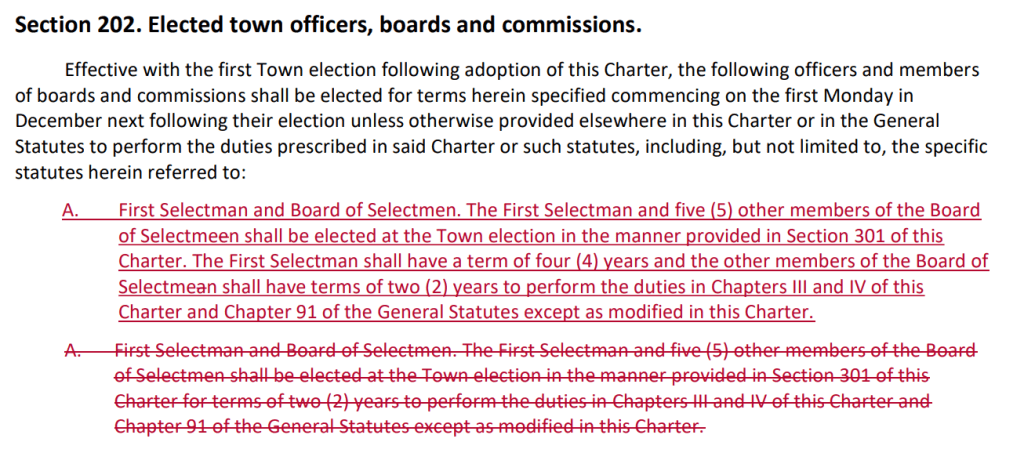
The committee’s recommendations call for a four-year term for the First Selectman, while leaving other members of the Board of Selectmen at two-year terms. This change would be put into effect for the 2027 municipal election, if passed by voters.
During discussions about the proposed modification, members of the CRC noted that the First Selectman position can be more effective with four-year terms, rather than the current two-year term.
A separate motion to consider term limits for the First Selectman did not make it out of the committee, failing by a 4-2 vote last November, with a single abstention.
Unsuccessful First Selectman Candidate Clause
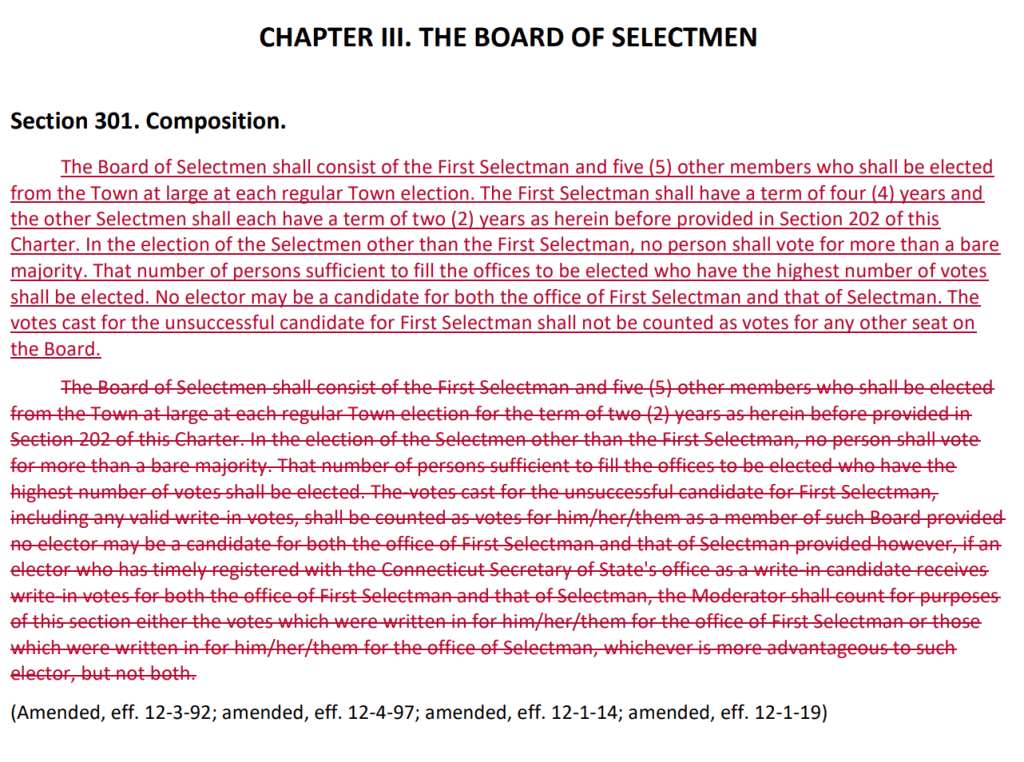
As the charter currently sits, the unsuccessful candidate for First Selectman can claim a seat on the Board of Selectmen. This update would end that notion with the verbiage of, “No elector may be a candidate for both the office of First Selectman and that of Selectman.”
In the last six municipal elections, this clause has been exercised by John Monteleone (2013), John Diel (2021), and Tim O’Neil (2023). Those who have chosen not to exercise the clause include Ed Edelson (2015) and Rich Boritz (2019). In 2017, First Selectman Jeff Manville ran unopposed.
CRC Chairman Ruggiero said that this issue has been discussed in past years, adding that the position of First Selectmen differs from the rest of the board, being that it is a dedicated, full-time position.
Selectman Tim O’Neil said he had trouble understanding the logic behind this change.
“Doing this, you’re taking away the unsuccessful party’s most important person that they primaried in to run for First Selectman,” he said at the June 25 Board of Selectmen meeting.
Selectmen Jason Van Stone and Anne Armeno were in favor of the change during the committee’s vote.
Merging Planning and Zoning Commissions
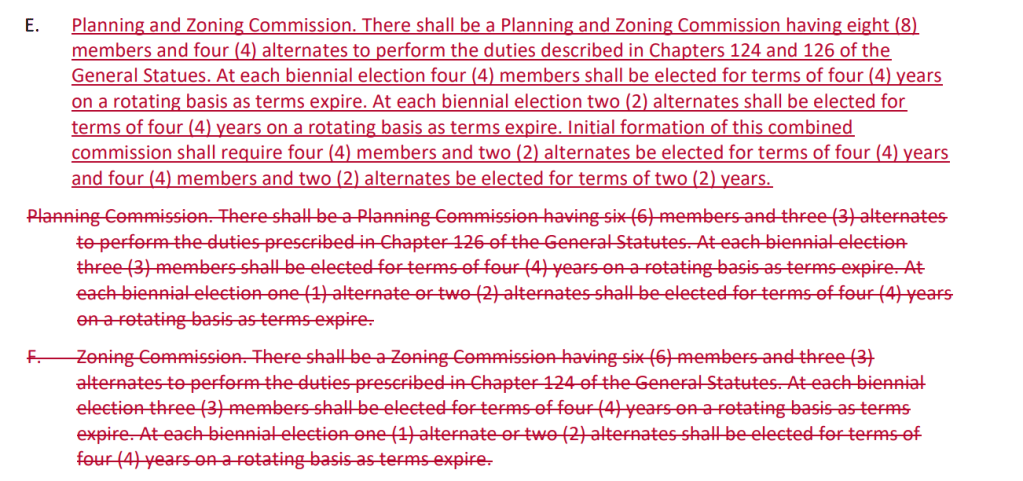
The proposed charter changes would merge the currently separate Planning Commission and Zoning Commission into one unified land use body. The CRC believes consolidation will streamline the process for businesses and developments that go through the land use process.
This move would put Southbury among other area towns such as Middlebury, Oxford, Newtown, Watertown and Seymour to have combined planning and zoning boards.
The initial formation of the combined commission would require four members and two alternates to be elected for terms of four years, while another four members and two alternates would be elected to a two-year term. This would create staggered terms, which First Selectman Manville said he is in favor of for this combined commission.
“It brings continuity to it,” First Selectman Manville said.
Timeline of Budget Process
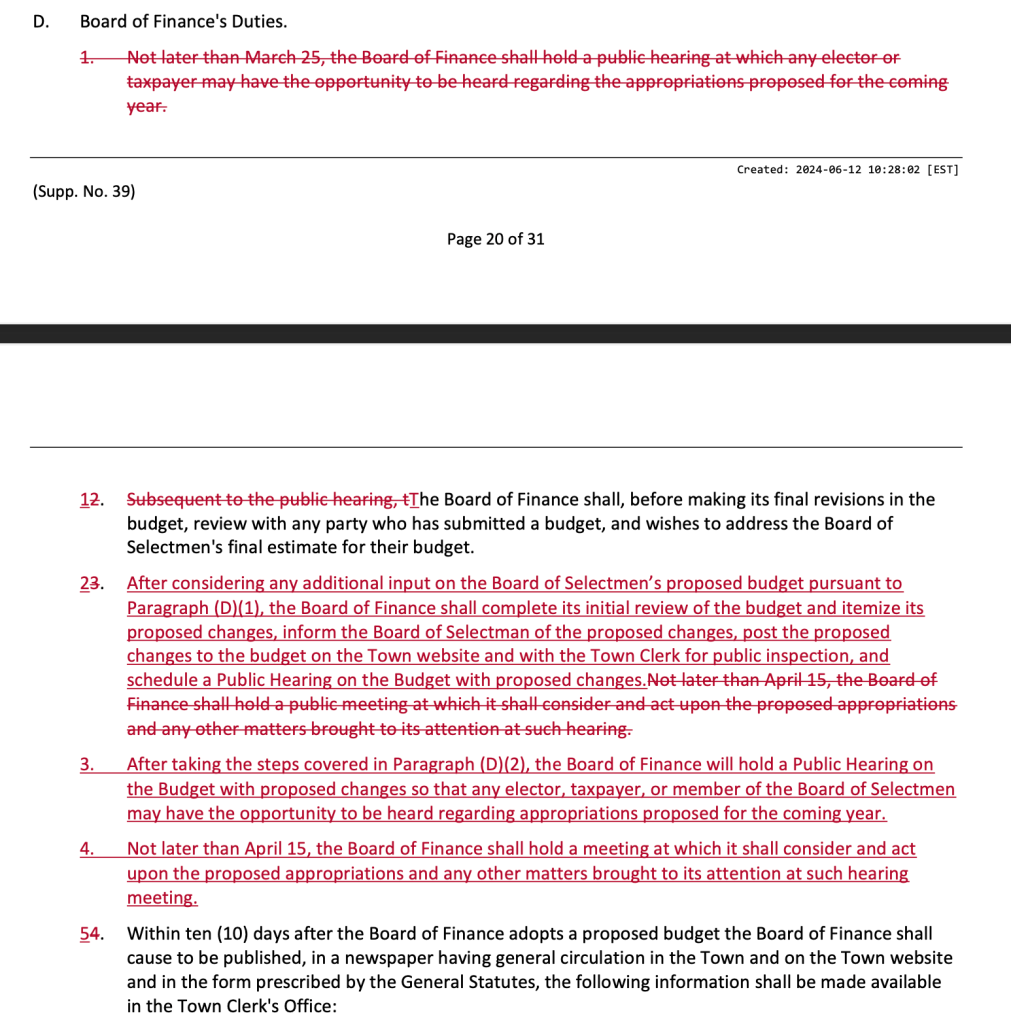
Section 702 of the town charter provides a step-by-step timeline and responsibilities for creating the annual town budget.
And while the process may have worked for Southbury in decades past, members of the public, like Fred Sell, say this section lacks sufficient clarity regarding the Board of Finance’s authority for making line-item changes to the Town’s budget.
Southbury’s unique structure of having the Board of Finance be the final sign-off of the budget before being put to a town referendum would stay in place, but the proposed change would move the public hearing on the budget to a later point in the process, allowing residents to comment on the finalized proposal, instead of only the Board of Selectmen’s submitted budget.
This issue was brought to life this year when the Board of Finance revealed proposed reductions to the Board of Selectmen’s budget, including the defunding of the economic development director position.
The budget cuts – totaling $624,743 – were made public at the Board of Finances’s April 1 meeting, which prompted more than a dozen members of the public to speak at their following April 14 meeting.
Staring at a cut to his position to just 10 hours per week, Kevin Bielmier, the town’s former Economic Development Director, has since left Town Hall for a job in the private sector.
The Board of Finance debated this topic at their most recent June 30 meeting.
Some say the proposal is reactionary to this year’s budget process – which some Board of Finance members say was an anomaly in regards to past years.
The timing of said budget cuts came when the town agreed to reduce the fair market value of the IBM property, which has long been the town’s top taxpayer.
The proposed budget timeline calls for increased transparency in regards to itemized changes to the Board of Selectmen’s budget, posting the changes online and with the Town Clerk, scheduling a public hearing on said changes and making decisions after the hearing.
Finance Ordinance Alternative
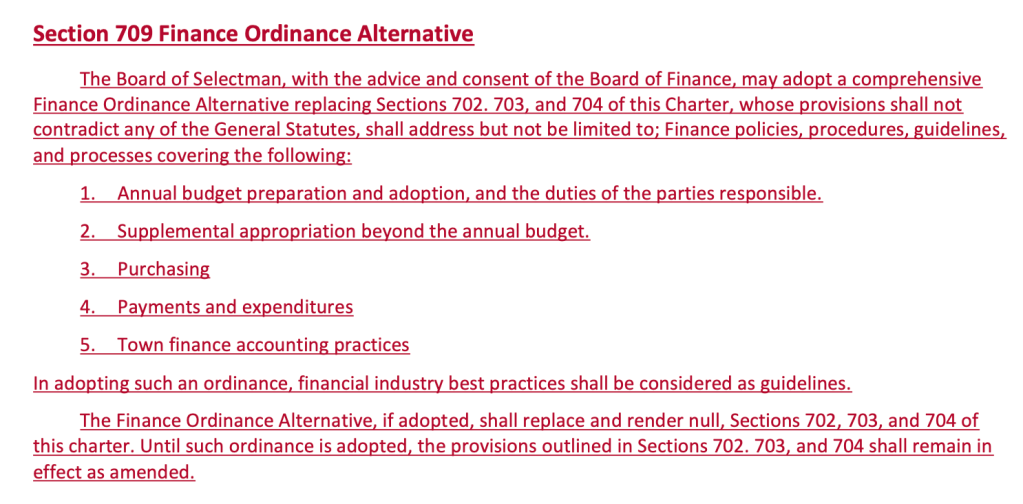
A new and more broad section to the charter, section 709, would allow for the Board of Selectmen, with the advice and consent of the Board of Finance, to adopt a comprehensive finance ordinance alternative that would replace sections 702, 703, and 704 of the living document.
This could potentially overhaul the process for annual budget preparation and adoption, the duties for those responsible and other town finance policies.
This potential addition, worded as an “optimization mechanism”, is a construct that was formed based upon feedback from Board of Finance chair John Michaels and the Finance Department within Town Hall.
It allows the Board of Selectmen, independently and between charter revision periods, to change those aforementioned sections of the charter.
As the CRC discussed this at their own meetings earlier this year, some members hesitated and expressed some concern for the potential override of town finance policies.
When presented with a motion to approve the suggested changes to section 709, the committee voted 4-3 to move it ahead. Dissenting votes were cast by Michael Carrington, Richard Lynch and Anne Armeno.
Omnibus/Technical Changes
While it is still unclear how proposed ballot questions will be formed, some smaller changes and edits to the charter are being mulled as well.
These proposed edits to the charter include the removal of the Public Appeals Board, the addition of an Emergency Services Director Position and the addition of language to allow the town to use ACH/Electronic payments, not just physical checks.
With the addition of a newly independent police department, language has been proposed to codify the department to reference state statutes.
In addition, borrowing limits would be revised from a fixed number to an indexed percentage of the budget, which adjusts for inflation.
An added requirement for the annual preparation of a State of the Town report would also be codified to be submitted in written form.
And even though the status of the current Emergency Medical Services Committee is unclear, language to codify the committee could be added as well.
What Didn’t Make The Cut
A high priority was made by the CRC to discuss the possibility of an added Town Manager or Town Administrator position, which included references to the Town of Newtown’s process of studying the potential position as well.
During the process, Ruggiero spoke with towns that have adopted similar positions, such as Ellington, Monroe and Newtown. It was determined that it was too soon for valid feedback from Ellington’s hiring of a Town Administrator in August 2023.
Julia Connor, the Executive Assistant to the First Selectman of Ellington, said that the continuity the new position has brought has been a net-positive for the town.
“I think it’s been very helpful to have a professional in the office to help with the day-to-day,” Connor told The Record. “Having that continuity and oversight, personally I think it’s been great.”
The CRC also referenced a 2023 Town Administrator Workgroup report prepared for the Newtown Board of Selectmen, which ultimately recommended the town establish a Town Administrator position. However, the Town of Newtown has yet to add the position.
Members of the CRC, including Jason Van Stone, questioned the public demand for the position.
Meanwhile, the topic was highly requested by members of the Finance Department to be looked at, with submitted electronic requests saying that someone to manage the day-to-day operations would “take the politics out of Town operations”.
In August 2024, Finance Department members Dan Colton, Claire Donovan and Samantha Farrell submitted similar requests to visit the topic.
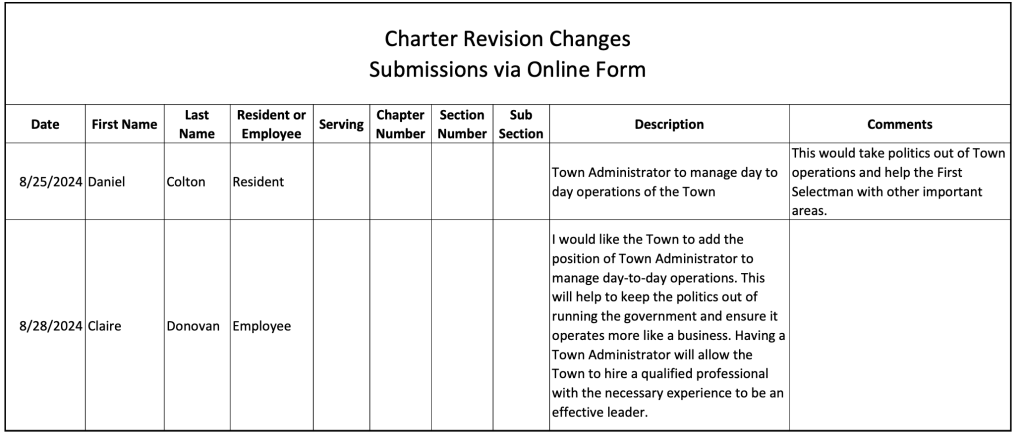
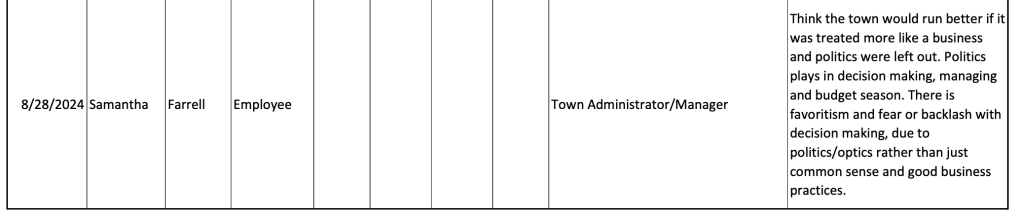
Colton said it would help the First Selectman with other important tasks of his job, while Donovan and Farrell both added that the town would operate better if it were to operate as a business, with politics left out of it.
“Politics plays in decision making, managing and budget season,” Farrell wrote in her electronic submission dated August 24, 2024. “There is favoritism and fear [of] backlash with decision making, due to politics/optics rather than common sense and good business practices.”
The CRC officially took the idea off the table at their April 16, 2025 meeting by a vote of 6-1.
Additionally, a request made by First Selectman Manville to change the votes needed by the Board of Selectmen to fire someone from five to four did not make the submitted final draft prepared for the public hearing. The request was made at the CRC’s June 4 public hearing.
Manville recommended the commission look at requiring a simple majority of the Board of Selectmen to fire someone, adding that Southbury is unique in needing four members to do so.
“I’ve been doing this for 10 years,” said First Selectman Manville. “You really need to consider if you have the votes, because once you bring it to the Board of Selectmen, if you do not have the votes, that employee is pretty much protected should you decide to discipline them some more. They are going to call it retaliatory, and it’s been a problem.”
The First Selectman added, “If you have good employees, it’s not a problem.”
CRC members, like Michael Carrington, said that the issue should have been brought to committee earlier on in the process, allowing ample time for research.
What’s Next?
The public hearing scheduled for Tuesday, July 8, will be held at 7:00 p.m. in Town Hall.
After that, the Board of Selectmen can propose changes to the recommendations up until August 1, 2025. The CRC can meet with the board up until September 2, 2025 to make any changes, and the board can ultimately approve or reject the proposals by a majority vote up until September 15, 2025.
The proposed changes must be filed with the Secretary of State by the Town Clerk by September 19, 2025.
Proposed edits must be published in a local newspaper by October 15, 2025. Voters will then vote on the proposed changes on November 4, 2025.
If the changes are approved by a majority of voters, the edits would take effect in January 2026.



 The Southbury Record