
On the final day of the fiscal year, the Board of Finance held its regular meeting to review year-end financials, approve certain budget transfers and to discuss some of the proposed edits to the town’s Charter, specifically those that pertain to the town’s budget process.
Potential Charter Changes
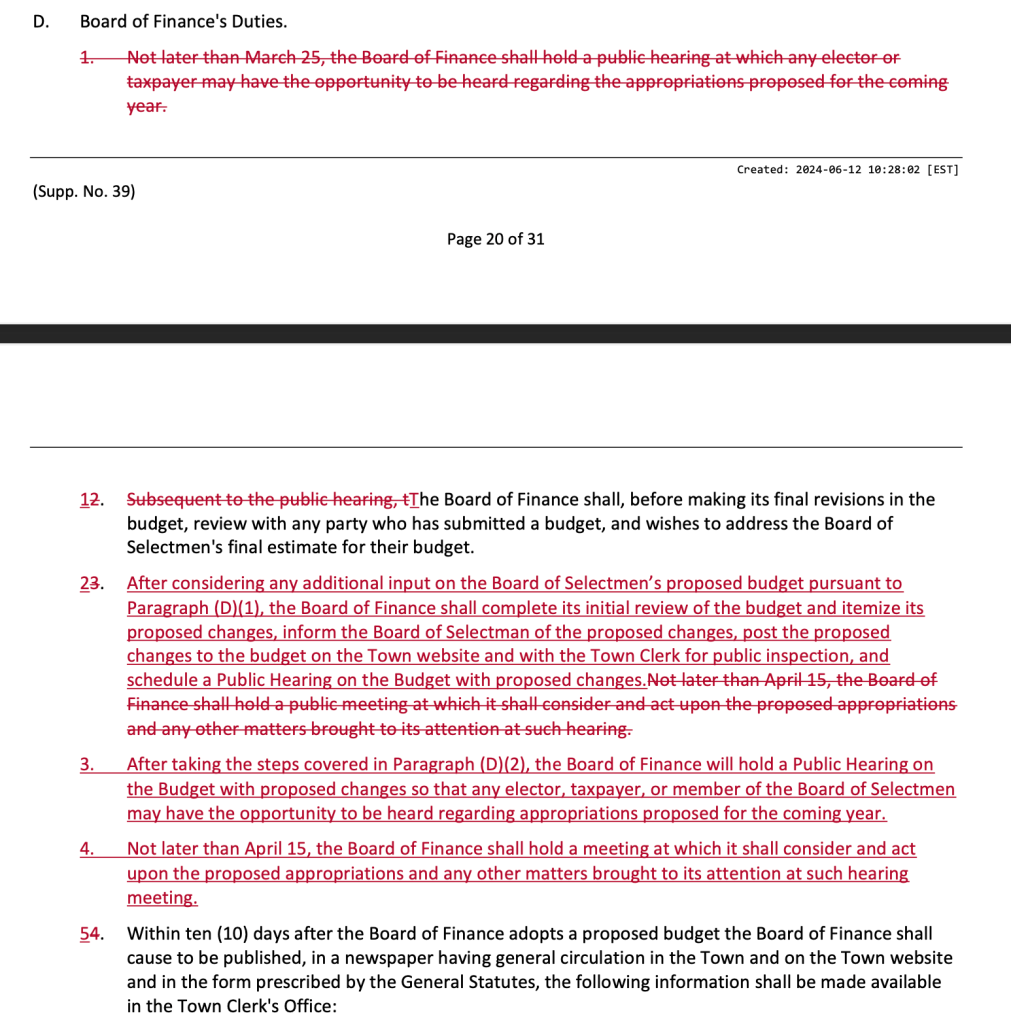
Nearly half of the hour-long meeting was spent talking about what led to a proposed change to section 702-D, or the Board of Finance’s duties on the budget.
The town’s unique structure of having the Board of Finance be the final sign-off before being put to a town referendum would stay in place, but it would move the town’s public budget hearing to a later point in the process, allowing residents to comment on the finalized proposal instead of only the Board of Selectmen’s submitted budget.
The proposal, submitted by resident Fred Sell, seeks to fix what he sees as a flaw in the current budget process.
Others felt the existing process has served the town well for decades and that the backlash was more about the outcome than the process itself.
Board of Finance Vice Chair Tom Connors said that he generally liked the suggestion, noting that he hadn’t seen such a back-and-forth budget battle until this year.
Board of Finance Chair John Michaels, who has been on the board for 53 years, said the same budget process has been used for decades.
“We did the exact same thing we’ve done for 50 years,” said Michaels.
Finance Director Dan Colton described the proposal as reactive, saying that proposed town Charter changes should rather be proactive.
“This is a reactive suggestion by one citizen in Southbury,” said Colton. “In my seven or eight years here, we’ve had many budget meetings. We have five budget workshops in February and three in March, where no one in the public shows up. I think we’re just adding another meeting that no one will show up to.”
Colton later added that the complexity of this most recent fiscal year played into budget talks.
“I just think, if we’re looking to change the whole process over one year, and by the way, this was an exceptional year with what happened to this town financially between a storm and Kettletown Road, I just don’t see the need to change the Charter for one reaction to change,” said Colton.
Board member Kim McNeill pointed out that in budget talks earlier this year, public comment came before any of the proposed cuts to the budget were ever revealed to the public.
“There was no way for anybody to comment on the suggestions or know about the suggestions before that was approved,” said McNeill.
She noted that public outcry over the defunding of the economic development director position brought more people to speak out on the issue than she’s seen during her time on the board.
Colton said those public comments were about the position, not necessarily about the budget process.
McNeill responded, “I think being upset that the position was cut goes hand-in-hand with how it was cut. Or how it was cut.”
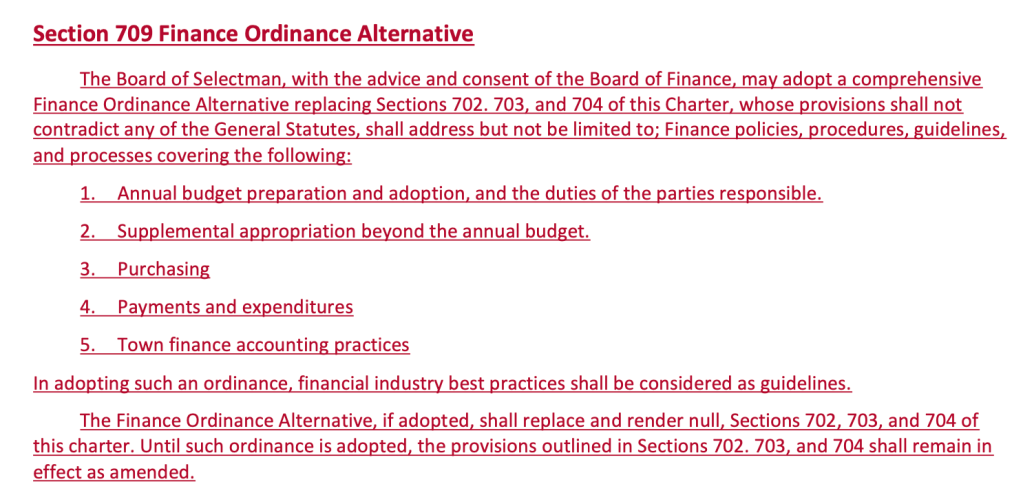
Additionally, a new and more broad section to the town’s Charter, a proposed section 709, would allow for the Board of Selectmen, with the advice and consent of the Board of Finance, to adopt a comprehensive finance ordinance alternative that would replace sections 702, 703, and 704 of the living document.
It could potentially overhaul the process for annual budget preparation and adoption, the duties for those responsible, and more town finance policies.
This potential addition, dubbed an “optimization mechanism” was grappled with by the Charter Revision Committee before being included in their final draft sent to the Board of Selectmen.
The proposed finance ordinance was referred to as “the basic one” when brought up briefly by the board chair.
The Record will be publishing a primer for the public hearing scheduled for Tuesday, July 8, which will go over the proposed changes to the town’s Charter.
Transfer Station
The topic of bulky waste fees sparked a debate over some concerns about the cost and complexity of dumping larger items at the transfer station.
Board member Brian Emerick said he recently visited the transfer station and tried to discard a small piece of plywood when he was told there would be a charge of five dollars to dispose of it.
Emerick noted there is a large sign with a price guide for individual items to be thrown away at the transfer station.
“I think that’s a disservice to the residents of the town to have to go through that sort of a hassle, and it’s totally unnecessary because we already pay for it,” said Emerick.
He clarified that his comments were not complaints about any staff at the transfer station.
Other members of the board, like Jack Kelly, say they haven’t been charged for small drop-offs.
“I have not experienced what Brian has recently experienced,” said Kelly. “If they’re charging everybody now, that’s new news to me, and I haven’t heard why they made that decision.”
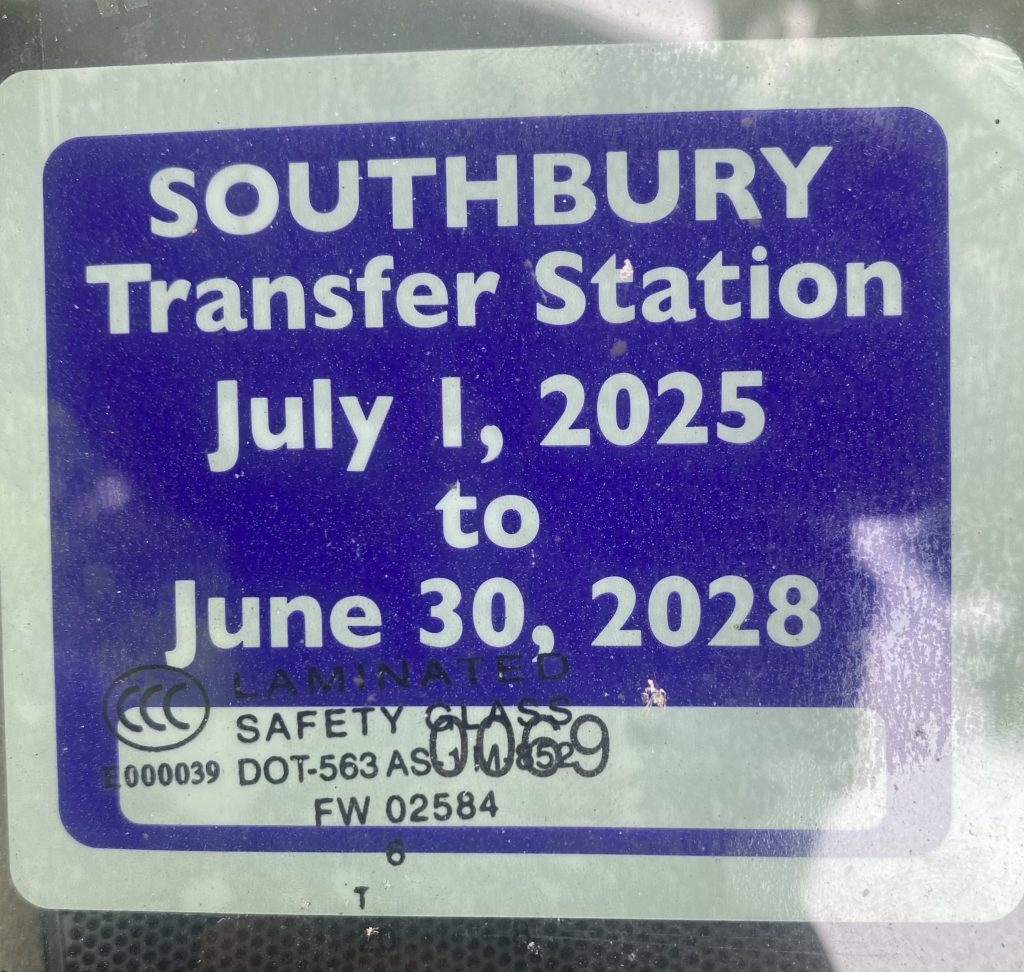
The topic was discussed in depth, ironically on the day before new transfer station permits are to be made available. Transfer station permits are free for all Southbury residents and are valid for three years.
Unlike in past years, the town will now keep track of how many transfer station permit stickers it gives out.
The chair of the board gave some thought to the revenue component, pondering what could happen if the transfer station imposed a user fee.
“The Board of Finance’s dog in this fight is money,” said Michaels. “If we make people pay for it, they might accumulate it, bury it, or do things like that.”
Colton said that so far, year-to-date, the transfer station has taken in $86,000, down from last year’s figure of $136,000. In the year prior, it brought about $100,000, into the general fund revenue account, he added.
Payments made to the transfer station have only been payable via check, but that will soon change. Credit card processors are being added, and staff are being trained, said Colton. Currently, the transfer station employs two full-time positions and three part-time positions.
Ultimately, the issue was referred to the Board of Selectmen, who are scheduled to next meet on Thursday, July 17.
Bond Statement/FEMA Reimbursement
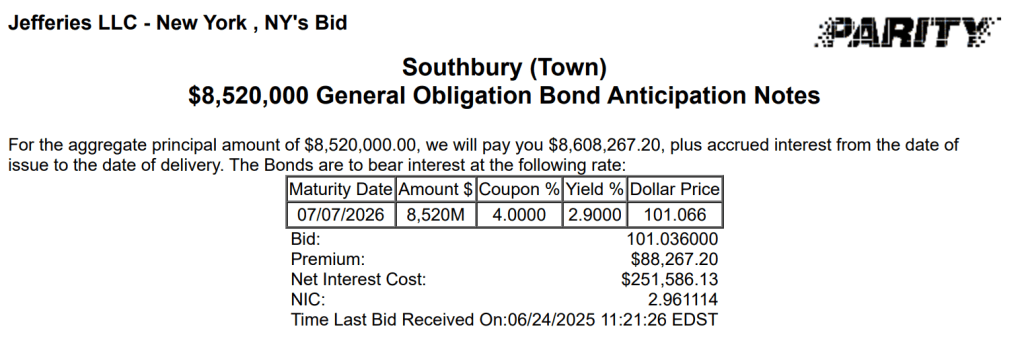
The board was also updated about the town’s issuance of bond anticipation notes to fund infrastructure repairs from the August 2024 floods. The appropriation of funds — $8.52 million — was approved by voters at a Wednesday, June 25, special meeting of the Board of Selectmen.
Out of five bids, the town chose New York-based investment firm Jefferies LLC, which offered the lowest net interest cost, coming in at 2.96 percent.
This favorable borrowing rate was helped by the town’s strong financial position, including its AAA bond rating. It’s expected that a significant portion of the borrowed funds will be eventually reimbursed by the Federal Emergency Management Agency (FEMA).
“From what we had heard from the bond counsel and the bond consultant, that given that we had no history in the market, they were shocked that we even had five bids and they were as competitive as they were,” said Colton.
A seven-year town debt service plan was presented in a prior board meeting, essentially providing a planning scheme with unknown figures in the equation, such as future FEMA reimbursement and actual repair costs. There had been repayment scenarios drawn up in the case that there would be no reimbursement money coming back to the town.
However, Colton detailed the first FEMA reimbursement payment of $1.15 million had been recently received by the town.
Additional reimbursement payments are anticipated to come in for the cost of improvements for the library at $1,019,000, as well as the second half of road repairs for about another $1 million. The town is also awaiting some reimbursements on bigger culvert and bridge projects, he said.
With no meetings scheduled for July or August, the next Board of Finance meeting is slated for Monday, September 15.


 The Southbury Record