Southbury’s Emergency Medical Services Committee — a longstanding body offering independent citizen oversight — is on life support, as town officials consider forming a new Public Safety Committee that would replace it entirely.
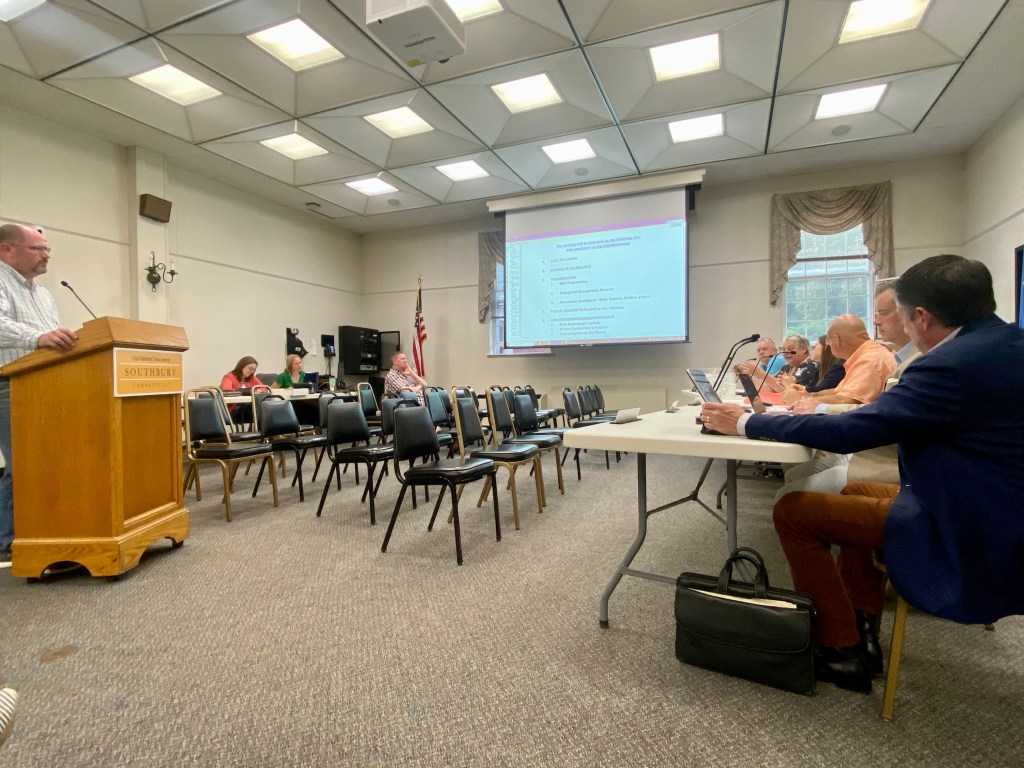
The proposal, presented at the June 12 Board of Selectmen meeting, would consolidate the town’s emergency services into a single entity with representatives from the town’s Police Department, Fire Department, Southbury Ambulance Association, Department of Public Works, Fire Marshal, Emergency Management, and the Health District — plus a Selectman.
The idea was first floated in early June as part of potential town charter changes, then formally presented to the Board of Selectmen.
While the proposal is backed by all public safety agencies, it would eliminate the EMS Committee’s unique structure of an independent, citizen-led advisory group. Members of the EMS Committee say they were not consulted or informed about the potential transition.
First Selectman Jeff Manville said a consolidated committee would “create continuity among all the departments in one place” at the June 4 public hearing for the Charter Revision Committee. It was just two days earlier that the proposal was suggested via an electronic submission to the committee tasked with proposing edits to the town’s charter.
Emergency Management Director Stephen Schnell described the potential Public Safety Committee (PSC) as a formalized extension of the working relationships that exist among the agencies, which would take on the task and role of the current Local Emergency Planning Committee (LEPC). The proposed PSC wouldn’t serve as an oversight board but rather serve as a coordination and communications platform, he said.
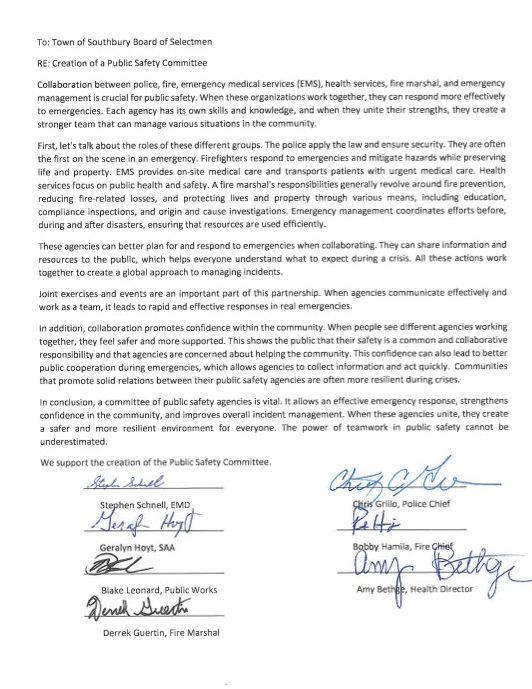
“The Public Safety Committee will enhance transparency for the residents and businesses within the town,” Schnell said during his presentation to the Board of Selectmen on June 12.
He said the new committee would include various agencies providing regular updates on their responses, activities, initiatives, and community outreach programs. Community members would also have the opportunity to address the committee about any public safety concerns.
Schnell detailed that committees like the LEPC are mandated by the state to develop comprehensive and annually updated emergency response plans, as well as to inform communities about present hazardous materials.
Meetings would be held in the evening — unlike the current midday LEPC meetings — and collaboration from local agencies would be encouraged, Schnell said.
“A lot of this is getting everyone on the same page,” he added.
Selectman Anne Armeno, who is also the board’s liaison to the EMS and LEPC committees, said she was unaware of any developments regarding a possible Public Safety Committee.
“As the liaison, I thought I might’ve known that this was going to happen,” Armeno said at the June 12 meeting.
She questioned the need for disbanding the EMS Committee, to which Schnell answered, “If we created a Public Safety Committee and said to EMS that they’re on their own, it’s not being inclusive.”
The Board of Selectmen decided not to take up a vote to formalize the committee, tabling the issue for a later meeting.
Some members of the Board of Selectmen expressed hesitation about moving forward without public input. Schnell’s presentation was unexpectedly moved up the agenda, placing it ahead of the public comment period.
“I’m not comfortable voting on this tonight,” said Selectman Justin Bette. “I’m not going to vote on it before we hear from the public.”
Selectman Tim O’Neil agreed, noting that the proposal had merit, but the board needed to proceed with more transparency.
It was later in the same meeting when both the chair and vice chair of the EMS Committee spoke during public comment, which usually sits atop the selectmen’s meeting agenda. Instead of having public comment to kick off the meeting, the public waited two hours — until 9:00 p.m. — until it was their time to speak.

Robert Pavlock, Chair of the EMS Committee, said he appreciated the board’s decision to defer the vote previously held in the meeting and urged the board to keep — and possibly expand — citizen membership and their oversight roles on future committees.
“I would encourage all of you to keep that public involvement, and potentially the expansion and enhancement of that involvement,” said Pavlock. “It’s a critical piece because, without that, you’re lacking the key part of what’s important to the public, and that’s their ability to have a say.”
Sarah Fatibene, Vice Chair of the EMS Committee, also spoke during the public comment section of the meeting.
In the committee’s most recent meeting, a unanimous vote was held to submit a petition in the form of a letter to the Board of Selectmen. Much of that June 18th letter echoes an earlier letter Fatibene had sent two weeks prior.
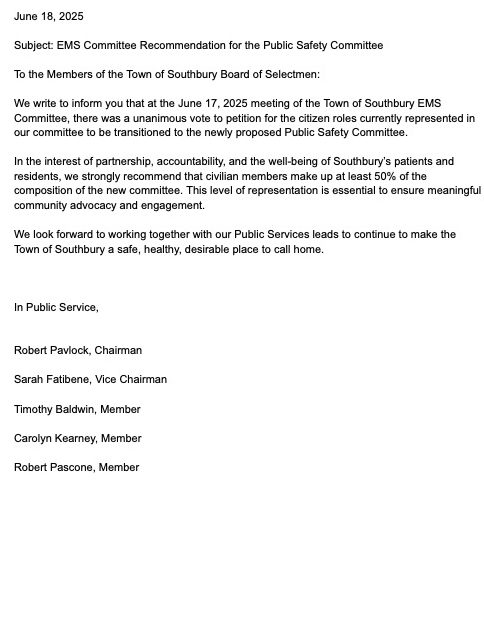
The EMS Committee’s letter reads, “In the interest of partnership, accountability, and the well-being of Southbury’s patients and residents, we strongly recommend that civilian members make up at least 50% of the composition of the new committee. This level of representation is essential to ensure meaningful community advocacy and engagement. We look forward to working together with our Public Services leads to continue to make the Town of Southbury a safe, healthy, desirable place to call home.”
Geralyn Hoyt, President of the Southbury Ambulance Association (SAA), said that the issue of creating a committee similar to the proposed PSC isn’t new, but one that has been talked about for years. As one of the signees representing the public service agencies that support the creation of the new committee, she says it would reduce the meetings she would have to attend.
“Yes, I am one of the [signees] because we all had to say whether we agree with it or not,” said Hoyt. “Why wouldn’t I agree to it?”
Hoyt said she already meets with members of the potential PSC in her regular work hours and that she would entertain an open forum style of meeting that is proposed. She noted that the SAA is already subject to equal or greater oversight from state and federal regulators compared to other agencies proposed for the PSC.
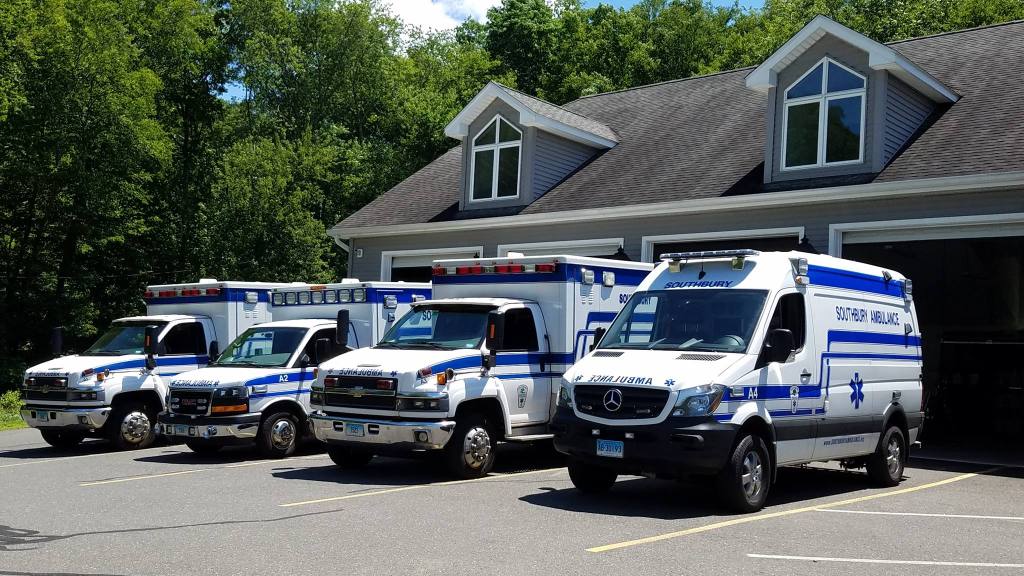
The SAA is the only agency that the EMS Committee is tasked with overlooking, since the Heritage Village Ambulance Association became defunct last year.
During the latest EMS Committee meeting, Hoyt and Pavlock questioned why other groups of emergency services don’t have some sort of local oversight committee.
Pavlock said, “There is some concern from some of the departments that if they start getting overseen as well, it could draw attention that they don’t want to them.”
Pavlock mentioned at the prior Board of Selectmen meeting that due to the ineffectiveness of the quarterly LEPC meetings, business is not always handled the way it should be.
“A lot of what occurs, occurs in clandestine deals,” Pavlock said. “That’s something really inappropriate for the community and public transparency.”
The LEPC consists of the same agencies that would make up the potential PSC, and Schnell said the LEPC meetings are often only 10 or 15 minutes long and held during the day.
According to the town’s website, the LEPC has met 10 times since the beginning of 2021, with an average meeting time of 12 minutes.
Schnell says when he first arrived in his position in 2020, there were 32 people on the LEPC, which made it difficult to obtain a quorum. The proposal to put the emergency service agencies under one umbrella would encourage public input and utilize the executive session function if there were sensitive topics to be discussed. Many of the documents the agencies work on, like the 750-page Local Emergency Operations Plan, are not publicly releasable, Schnell added.
“We want to hear from the residents. We want to hear from people that may have questions about why certain things operate the way they do,” said Schnell. “While we can’t give out the playbook, some of that can be answered in a back-and-forth.”
Meanwhile, some EMS Committee members are determined to see the outcome of any new committee retain its primary goal of quality patient care.
Timothy Baldwin, an EMS Committee member, said that his background of being a service chief has made patient care his main objective. He said the bulk of the town’s official and comprehensive EMS plan, which was produced with the help of his committee, is about assuring what is best for the patient.
“At the end of the day, we need to ensure that these safeguards that have been built into all of this continue,” said Baldwin. “Whether or not we’re on the town website or on the EMS Committee, doesn’t matter… At the end of the day, we need to make sure that the patient care makes it in there.”
The Charter Revision Committee discussed the topic briefly at their latest meeting on June 18, but decided to do nothing and let it be handled by the Board of Selectmen. The EMS Committee is to be codified into the town’s charter this year after decades of not being in the document, but the PSC proposal would effectively nullify that change.
The Board of Selectmen has not set a new date to revisit the proposal. If and when the PSC returns for a vote, it remains unclear whether citizen oversight — a defining feature of the EMS Committee — will be preserved or phased out entirely.
The Board of Selectmen will hold a special meeting on Wednesday, June 25, but the topic of forming a PSC is not on the posted agenda.


 The Southbury Record