Pomperaug Boys Basketball Coach Was Placed on Administrative Leave Mid-Season, FOIA Documents Show
Editor’s Note (click to expand)
This story is based on 33 pages of documents obtained through a Freedom of Information Act request, along with interviews conducted over several weeks with individuals connected to the Pomperaug boys basketball program. Some sources requested to speak on background due to concern about potential backlash within the school community. The Record provided the coach and district officials multiple opportunities to respond to the concerns detailed below.
SOUTHBURY — Shawn Mobilio’s return to the court was evident.
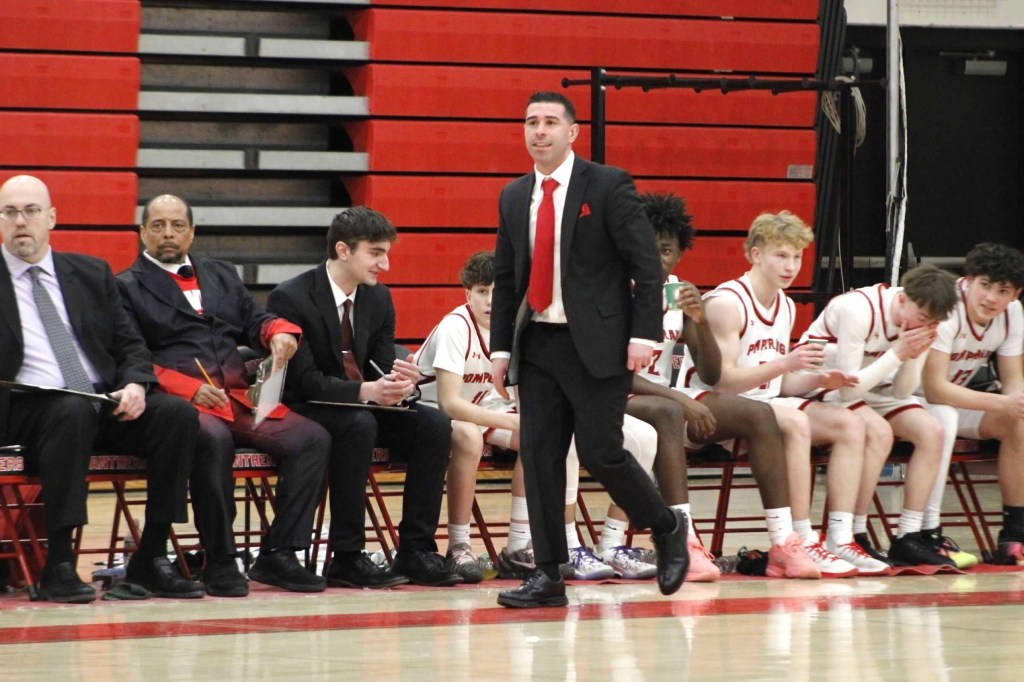
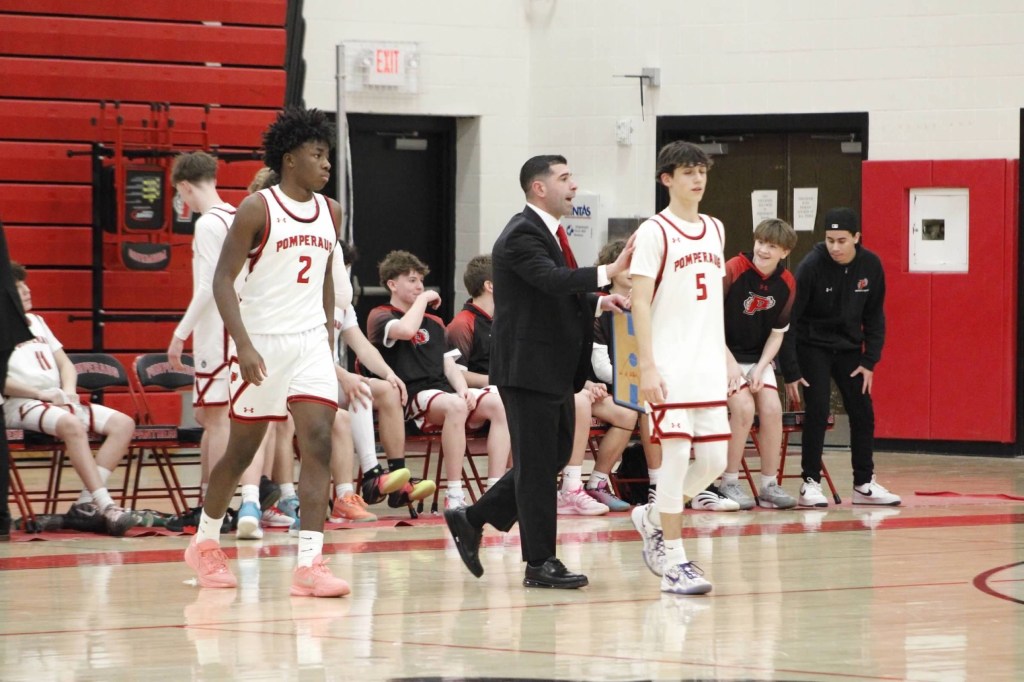
Following a four-game absence, the third-year head coach of the boys basketball team at Pomperaug High School (PHS) stepped back onto the sidelines, wearing a suit and red tie that matched the team colors.
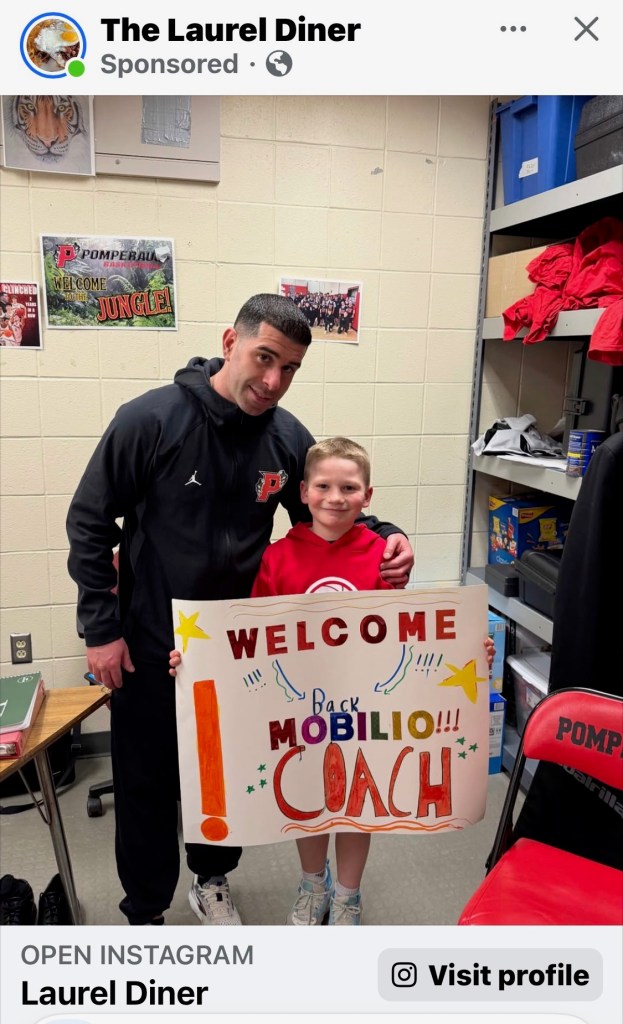
A handmade sign in the crowd read, “Welcome Back Coach”.
The message, at least publicly, was simple: he was back.
What had not been explained was why he had been gone.
School officials had previously described the midseason absence only as a “personnel issue” that they would not elaborate on. Student-athletes were initially told Mobilio was sick. Families were left in the dark about what was happening.
Records obtained by The Record through a Freedom of Information Act (FOIA) request show Mobilio had been placed on administrative leave during that stretch following escalating complaints from parents and families about the climate and culture of the program.
The documents received in the FOIA request span more than 30 pages of emails and correspondence, showing an internal process that unfolded largely out of public view.
Some of the written concerns raised to school officials include allegations about the coach’s conduct toward student-athletes, with multiple families describing what they characterized as a psychologically harmful environment and increasingly inaccessible to players who did not participate in Mobilio’s private, for-profit coaching enterprise, according to interviews with multiple people connected to the program.
The Record spoke with multiple sources with direct knowledge of the program and its culture over the past three seasons. Those sources, whose identities are known to this reporter, spoke on deep background out of concern for the student-athletes in their care.
Their accounts align with themes reflected in the documents obtained through the FOIA request.
Escalating Concerns
Concerns about the direction of the program did not emerge overnight.
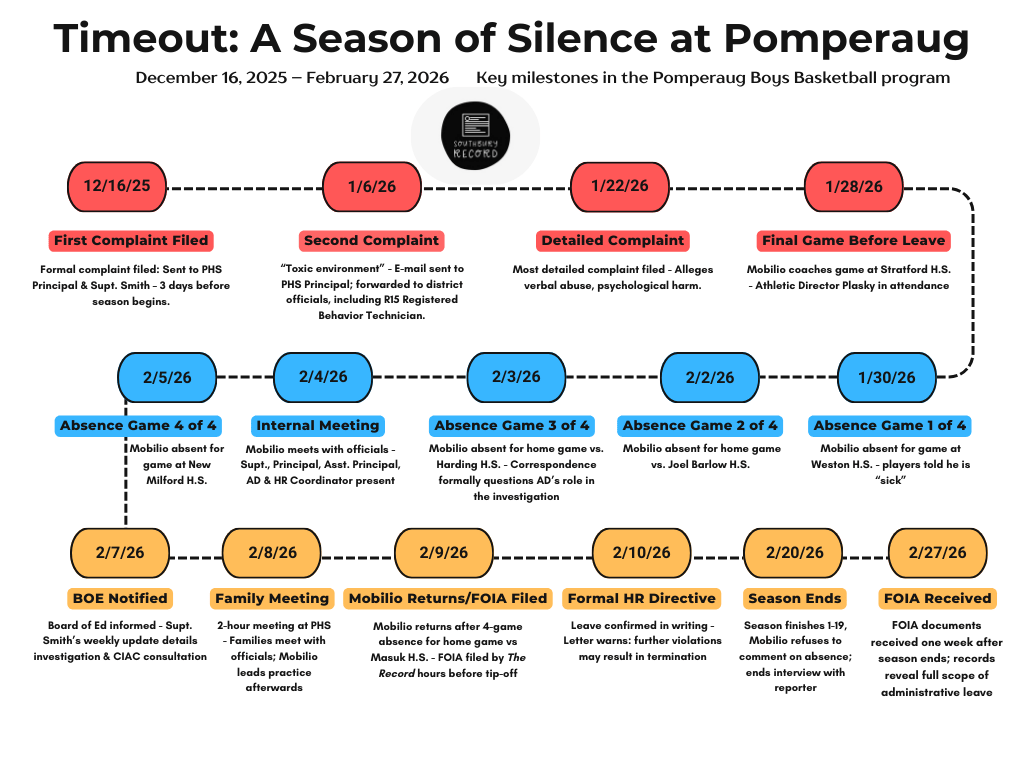
In mid-December, just days before the regular season was set to begin, the first formal complaint included in the district’s file outlined what they described as prior and ongoing concerns with the team’s climate and the treatment of student-athletes.
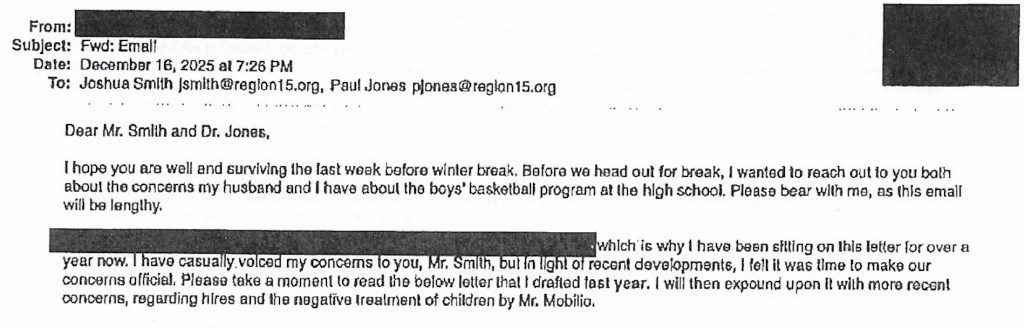
The complaint raised allegations that players who did not participate in one-on-one training through the coach’s personal business would allegedly not be able to join any pick-up games with the team.
In early January, additional correspondence followed, raising similar concerns about player treatment and the “toxic environment” of the program.
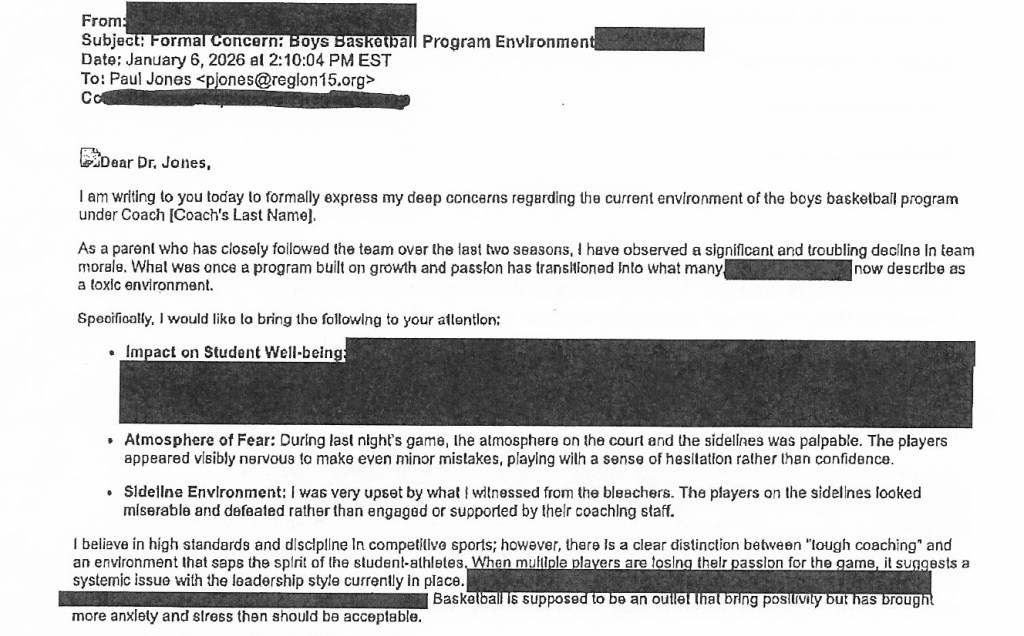
By late January, complaints had grown more detailed.
One letter, dated January 22, characterized the environment as increasingly strained, citing instances of public criticism towards players and what the parent described as “psychological harm” and communication described as “manipulative”. Another questioned whether participation in the coach’s outside basketball training business created perceived inequities within the taxpayer-funded high school program.
Additional complaints about the way Mobilio communicates with students were also raised in documents and interviews with those connected with the team. Although the school district has deployed the ParentSquare app as of this past fall as the designated all-in-one communication platform for educators and students, several sources have said that the coach continued to directly communicate with players via text message.
On January 28, Mobilio coached from the sidelines during an away game at Stratford High School—a game also attended by Region 15 Athletic Director Ron Plasky.
On January 30, the team’s following game at Weston High School, Mobilio was not present. He would be sidelined for three additional games the following week, on February 2, February 3, and February 5.
Student-athletes were told he was sick, according to multiple families. Records show that during that period, administrators were conducting interviews with players and parents and reviewing the submitted concerns.
Investigation Into Complaints
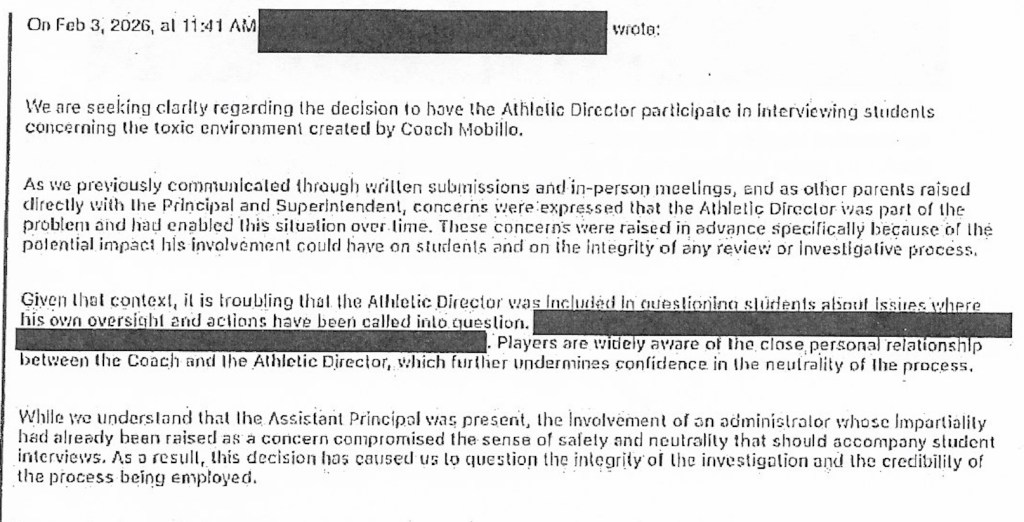
Correspondence sent to PHS Principal Dr. Paul Jones on February 3 sought clarity on the investigation and raised concerns about the process, which included the athletic director.
“Players are widely aware of the close, personal relationship between the coach and the athletic director, which further undermines confidence in the neutrality of the process,” reads the February 3 email.
The relationship between Mobilio and Plasky predates the coaching hire—the two met when Mobilio was a student in Naugatuck, where Plasky worked as a gym teacher and athletics coordinator before being hired by Region 15 in 2017.
Documents also raise questions about the hiring of Antonio DeMoura—identified in the FOIA records as Mobilio’s stepson—as the program’s freshman team coach, a decision that, according to correspondence, drew additional concern from some families.
The following day, February 4, documents reveal that Mobilio met with a group of school officials, including the athletic director, the PHS principal and assistant principal, Region 15 Superintendent Josh Smith, and the district’s human resources coordinator.
According to FOIA documents, the purpose of that meeting was “to ensure alignment on expectations and to provide [Mobilio] the opportunity to outline how [Mobilio] intends to positively lead the team for the remainder of the season.”
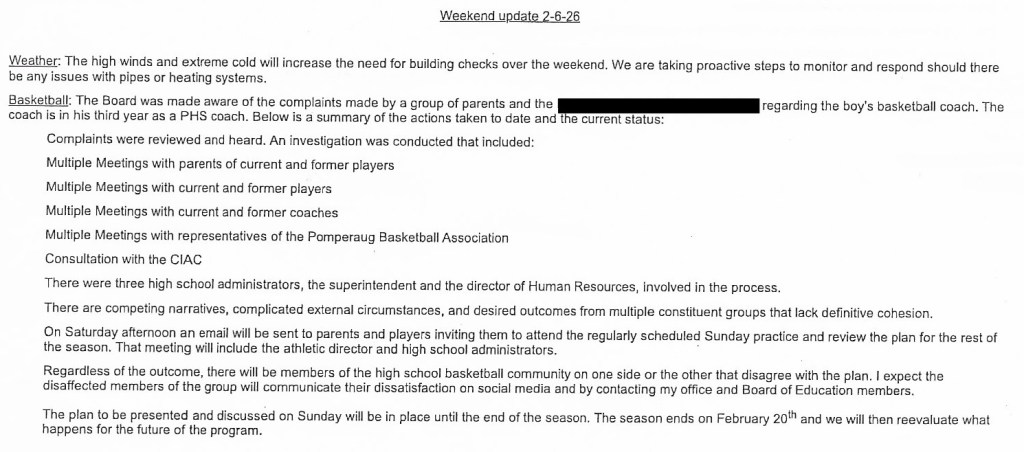
By Saturday, February 6, the Region 15 Board of Education was made aware of the investigation via an email from the superintendent in correspondence that reads as a weekly update to the board.
In the message to school officials, it relays that an investigation was conducted, consultation was made with the Connecticut Interscholastic Athletic Conference (CIAC), and a separate meeting was planned for families the following day.
(The Record reached out to the CIAC multiple times regarding the school district’s communication to the governing body of high school athletics in the state but has not heard back as of publication.)
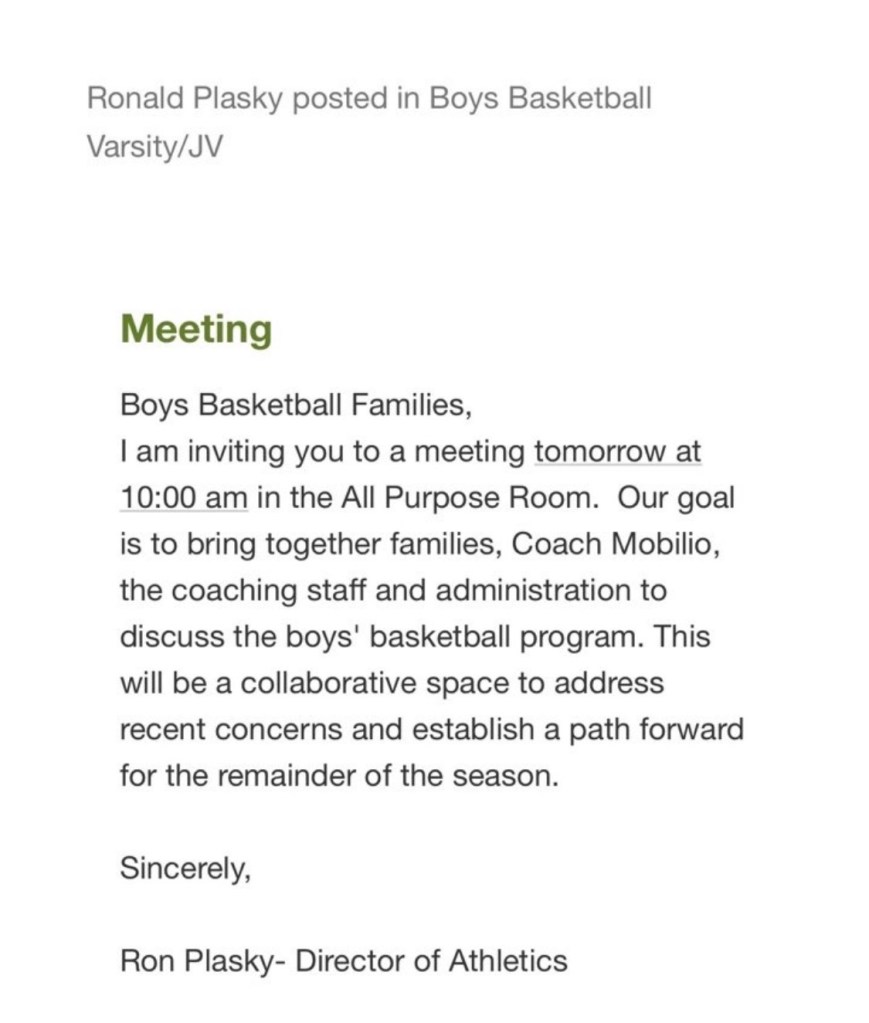
Families were notified on Saturday evening about the meeting to be held the following morning, with the goal to “bring together families” and to collaboratively “address recent concerns and establish a path forward for the remainder of the season.”
The following day, families gathered in the all-purpose room of PHS for nearly two hours and addressed concerns with school officials.
The meeting aligned with an already scheduled team practice, and by the time the families left, Mobilio could be seen inside the gym leading the practice.
The season continued.
“He’s Back”
The next day, Monday, February 8, the team was scheduled for a home game against Masuk High School, which would mark Mobilio’s return to the program after a four-game absence.
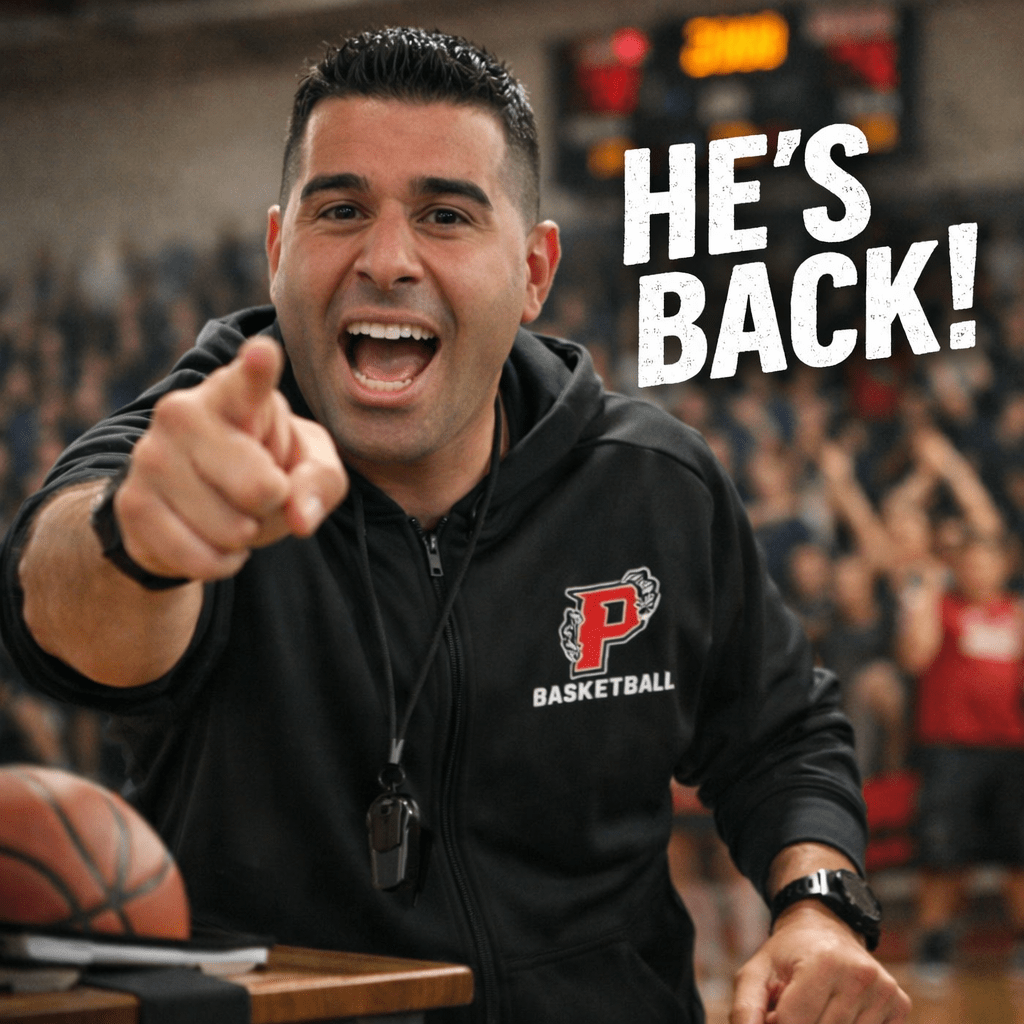
About 12 hours before tip-off, Mobilio sent this reporter a text message: “It was a personnel decision that I cannot speak about. Moving forward and focusing on the future, not the past.”
The text messages were accompanied by an AI-generated image of Mobilio with the text “He’s Back!” The image offered no explanation for where he had been.
“The result is that I will be coaching tonight’s game,” the head coach said. “That’s all I am allowed to say.”
The Record’s FOIA request was filed on Monday, February 8, just hours before his anticipated return to the sidelines. A total of 33 pages of correspondence were received on Friday, February 27—a week after the season ended.
A 44-42 loss to Masuk at home came down to the final moments of the game, as the Panthers’ record fell to 1-14.
Following the game, an interview with Mobilio was conducted where he said, “Sometimes when you’re not winning, you lose sight of having fun. I lost sight of having fun.”
Administrative Leave
A letter dated February 10 from the district’s human resources coordinator—sent the day after Mobilio’s return—formalized what the district had not publicly acknowledged.
“As you know, these concerns resulted in your placement on administrative leave while we reviewed the situation and gathered information,” the letter reads.
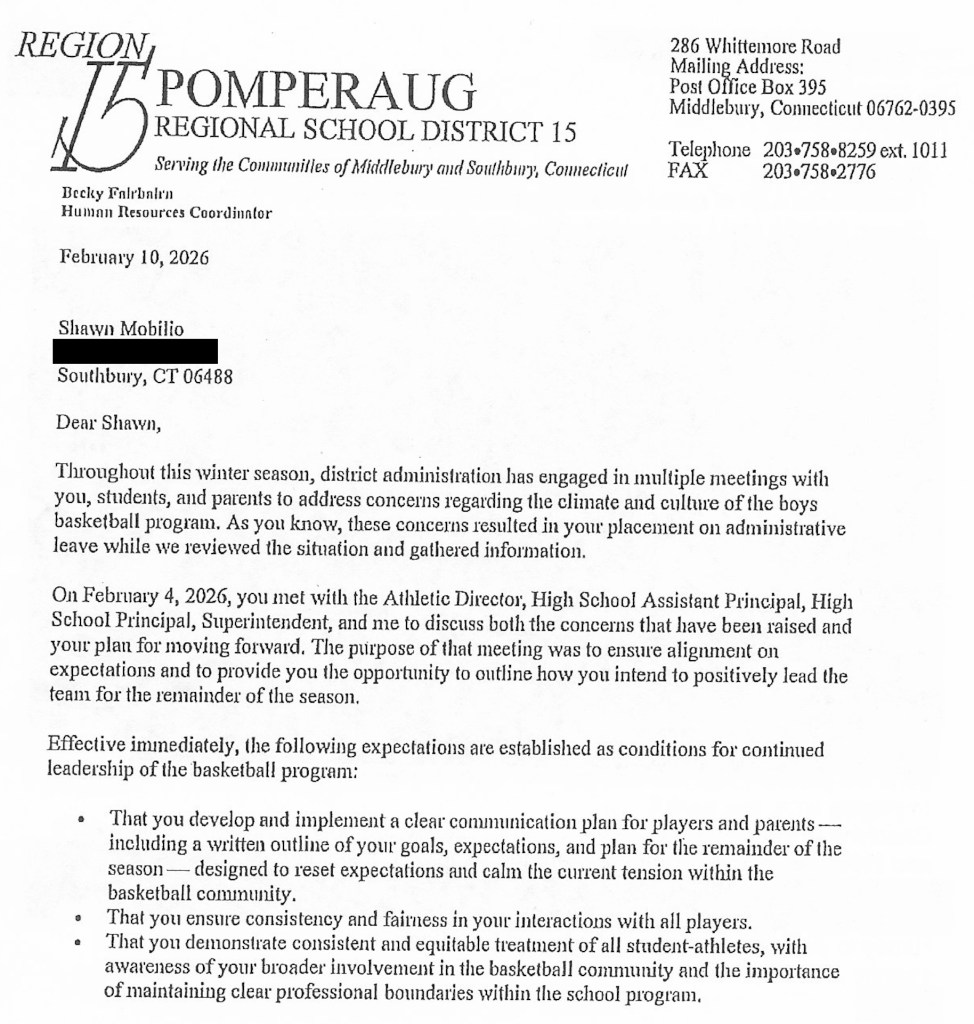
The letter goes on to say, “Moving forward, we will be looking for measurable evidence of improved communication, strengthened morale, and a more constructive team culture.”
“Please consider this letter a formal directive outlining expectations for immediate and sustained improvement,” the letter continued.
Mobilio declined to elaborate. The district had still not publicly confirmed the leave.
Final Week of the Season
Throughout the season, post-game interviews were regularly conducted in the coach’s office.
Flanked by his assistant coaches, Mobilio took questions at his desk, while players typically said their farewells until the next practice or game during the course of interviews.
Photos of the previous team’s accomplishments lined the walls behind him, while a copy of the University of Connecticut men’s basketball head coach Dan Hurley’s latest book “Never Stop” sat within an arm’s reach of Mobilio.
He projected a positive outlook on the season and spoke about battling through adversity, even after the team’s 55-point loss to Bunnell High School, Mobilio’s second game since returning to the sidelines.
However, a post-game interview was initially refused after that game. Only after promptly consulting with the athletic director was an interview granted.
When asked how the season had changed him as a coach, Mobilio said: “I’m the same coach. Nothing has changed. Still a good person, still a good coach.”
Mobilio’s underdog story is brought up: an undersized point guard who was told he was “too short” to play college basketball. His 2019 self-published autobiography, “7ft Heart,” details his story of pursuing his dream of playing basketball at the next level. After stints at Southern Connecticut State University and Western Connecticut State University, he went on to play semiprofessional basketball in London, Ireland, Scotland, and Wales.
“Have you ever seen the movie Rocky?” quips Mobilio in a post-game interview. “I think going through life as a boxer or as a coach, adversity will come. How do we handle it?”
Letters of Support
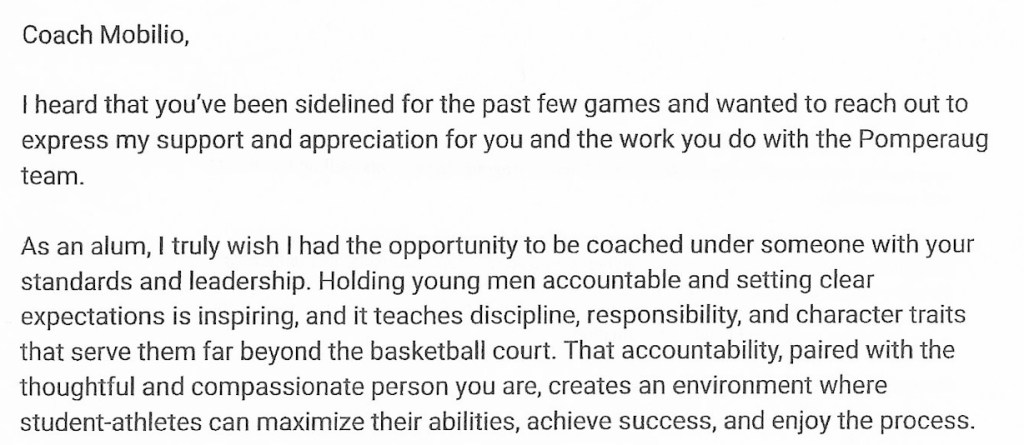
Included in the documents obtained by the FOIA request are some undated letters of support.
Those undated letters are believed to be given as written correspondence either directly to the PHS principal or Mobilio himself, according to the superintendent.
One letter is addressed to Mobilio and reads in part, “I hope you know how much your presence and leadership truly matter. Please know that there are parents and players who recognize the positive impact you have made and who truly appreciate what you bring to this program.”
Another undated letter reads as a letter from an alum of the program, saying that Pomperaug High School is fortunate to have a coach “who is committed to doing things the right way.”
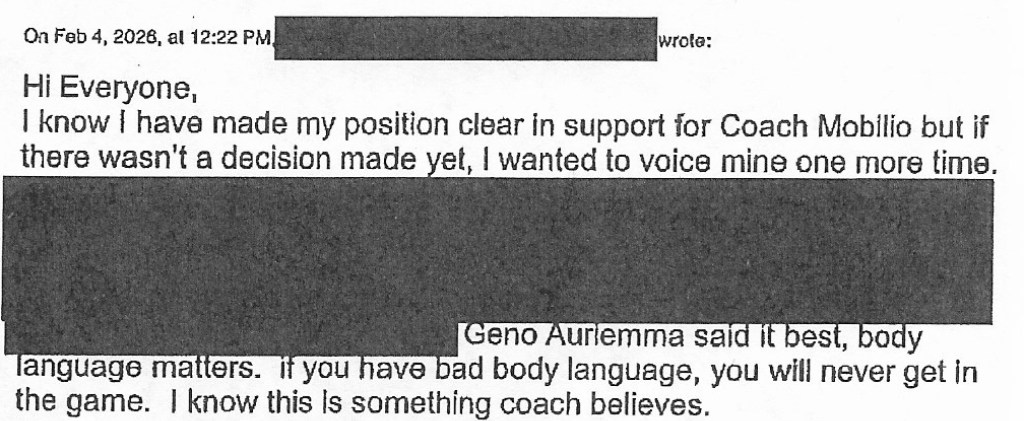
E-mail correspondence dated January 12 and February 4 from the same sender to school officials details their reasoning for support, saying, “Coach is building a culture here, and it is built on hard work and dedication.”
Past Players of the Program
In reporting this story, The Record conducted several interviews with former players of the program who have either graduated in the past two years or who have chosen not to participate in the program any further.
Their identities are being withheld due to fear about backlash within the school community.
Their accounts echo themes raised in the complaints submitted to the district.
Several former players described a coaching style they characterized as intense and, at times, demeaning. Some said upperclassmen would quietly advise younger players about what to expect during practices and games. Others described teammates who left the program or opted not to try out in subsequent seasons.
One former player said that their “love of the game” had been negatively affected.
A former player with the program said that they believed Mobilio’s behavior persisted in part because of what they perceived as a close relationship between the coach and the athletic director.
“It’s hard to get change when administrators are that close to the problem,” the former player said.
Other former players say they were “not surprised” when they heard about Mobilio’s absence during season, describing it as consistent with concerns they had previously discussed among teammates.
A line tucked at the bottom of Mobilio’s basketball program website reads, “Playing for Mobilio’s basketball program doesn’t guarantee you make the high school team.”
However, text messages shared with and verified by The Record show Mobilio promoting opportunities for personal training sessions through his for-profit basketball enterprise to current and prospective high school players.
Former players said they were sometimes asked about their availability to assist with camps or programs connected to that business. Several described feeling perceived pressure to remain involved in Mobilio’s outside business in order to maintain a standing within the high school program, an allegation Mobilio has not publicly addressed.
The concerns raised by former players span multiple seasons, suggesting the issues described this winter may not be isolated to a single year. Whether those concerns reflect a broader cultural issue or a divided interpretation of a demanding coaching style remains at the center of debate within the school community.
Transparency and Oversight
As of publication, no public statement has been issued by Region 15 acknowledging the administrative leave, outlining the nature of the review, or explaining the conditions under which Mobilio returned to coaching.
The district has not publicly disclosed whether the review substantiated or dismissed concerns raised in the complaints.
The HR letter sent to Mobilio on February 10 warned that “continued concerns regarding climate, fairness, or professionalism will result in further administrative review and potential action up to and including termination.”
The season ended 10 days later.
A brief statement was given to The Record when the FOIA request was being reviewed in the district’s central offices.
“We care about all student-athletes’ well-being,” said Superintendent Smith.
Throughout Mobilio’s absence, Plasky said that he expected Mobilio back “soon” but would not elaborate on the “personnel issue.”
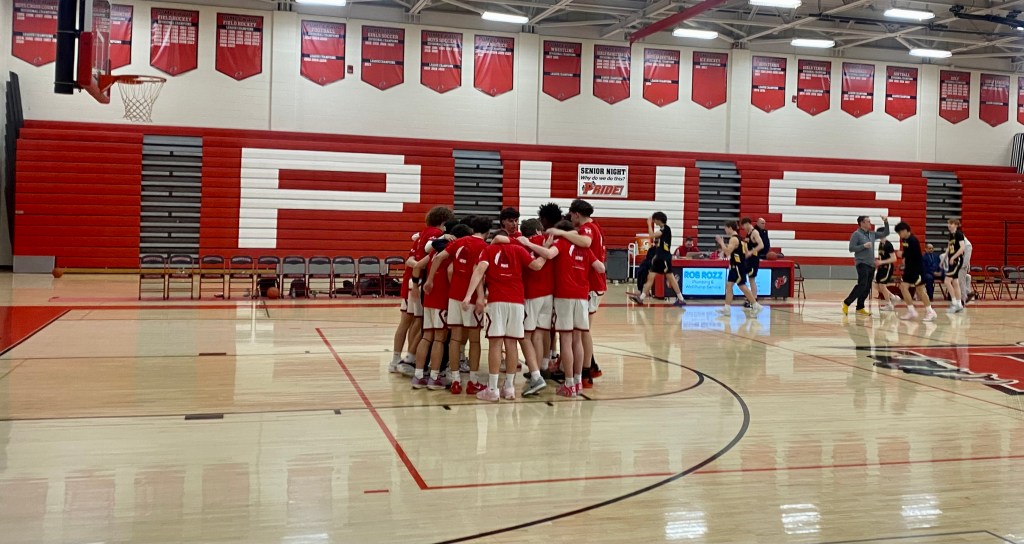
The season ended February 20 with a fundraiser game for the Alex Archie Foundation, a nonprofit promoting student-athlete mental health and also named after a former Pomperaug student-athlete.
“Be a mental health hero,” read the message on the back of the team’s warmup jerseys.
For some families connected to the program, the sentiment landed differently than intended. The concerns they had raised internally—about psychological harm, about the emotional safety of student-athletes, about a process they felt was compromised before it began—had not been publicly acknowledged by the district.
The team finished 1-19 on the season, honoring their lone senior in the final game.
For some of those players, the final game was not the end. Families speaking on deep background told The Record that some student-athletes continue to feel the lasting effects of what they described as harmful and belittling treatment directed at players throughout the season.
The season finale ended with multiple opportunities given to Mobilio to elaborate on the absence that still left families with unanswered questions.
Mobilio refused to answer questions related to his now-known administrative leave and ended the final post-game interview.
Whether those concerns shape what comes next for the program remains to be seen. The season is over. The questions are not.
By Evan Triantafilidis


 The Southbury Record