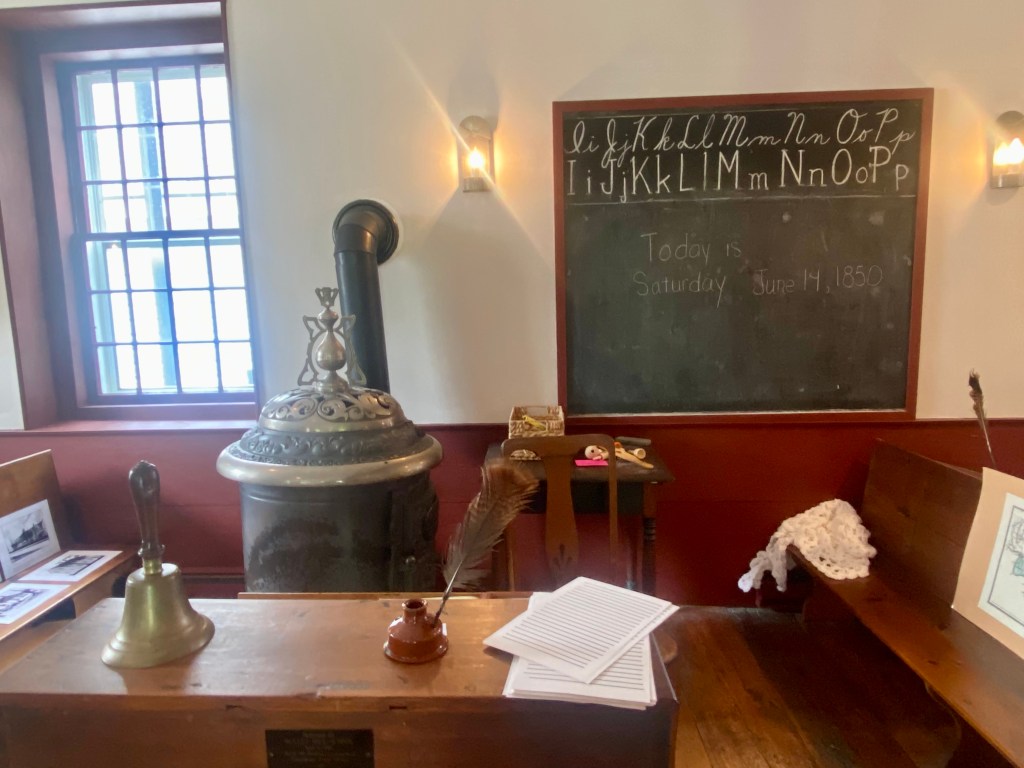
For nearly 40 years, a spring day at Bullet Hill School in Southbury meant stepping out of the present and into the past.
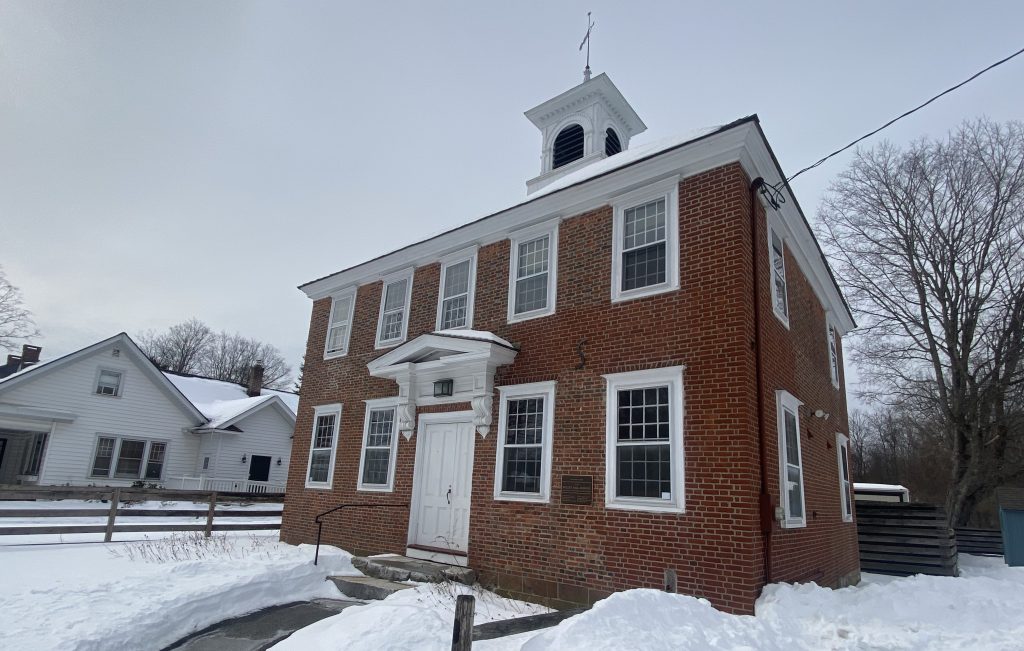
Elementary school students – mainly second and third grade classes – arrive by bus at the small brick schoolhouse and are greeted by a costumed docent, ready to begin a school day set in the 1850s.
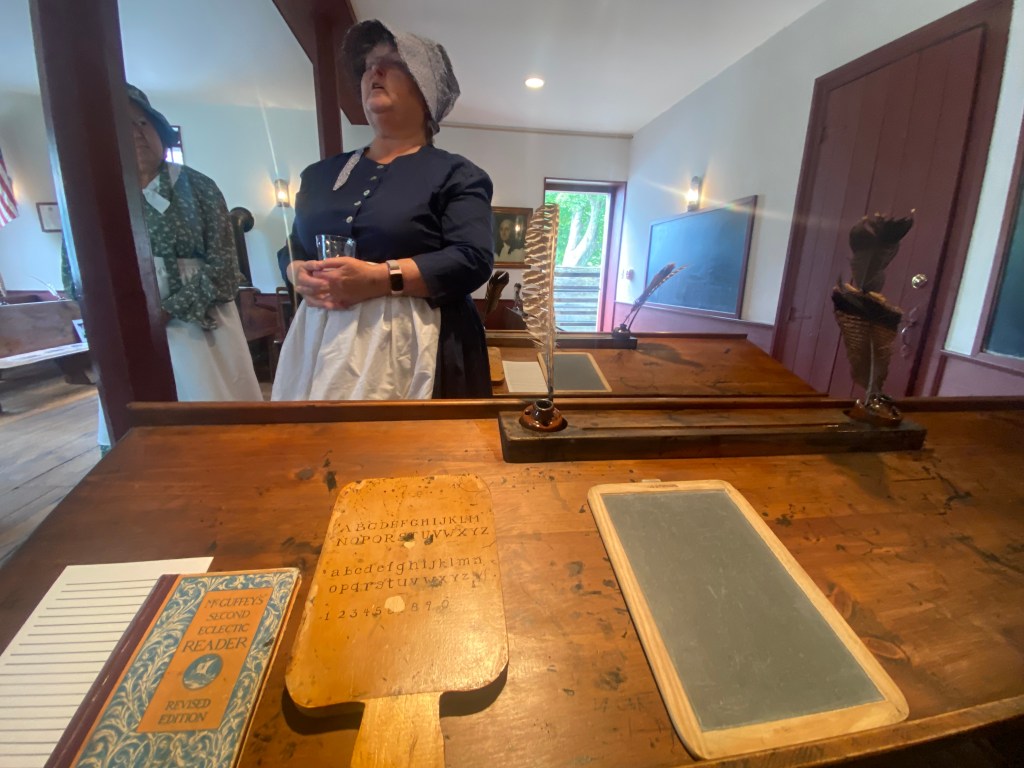
Quill pens replace pencils. Slate boards replace notebooks. The attire worn by students reflects the time period: boys in short pants and suspenders, girls in long skirts with aprons and bonnets.
This spring, for the first time in decades, the tradition known as “Bullet Hill School Days – A Living Museum” will not take place in its usual form.
The Region 15 school district has effectively paused the program as part of a curriculum realignment, with district correspondence indicating the experience is expected to be reworked to better match fifth-grade social studies standards in coming years.
For the volunteers and organizers who have sustained the Living Museum program since the 1980s, the abrupt change comes as “devastating” and puts the future of one of Southbury’s most valuable historic resources into an uncertain future.
A Program Born
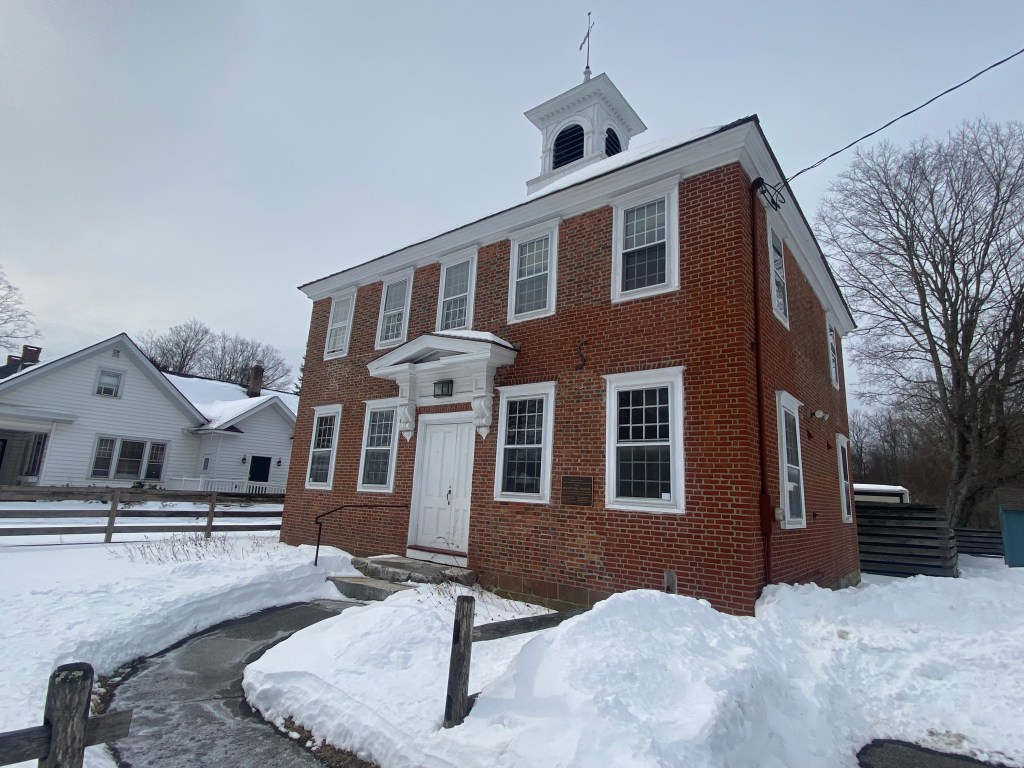
The Living Museum program began with a community-wide effort a year before the first class stepped foot inside the oldest public building in Southbury.
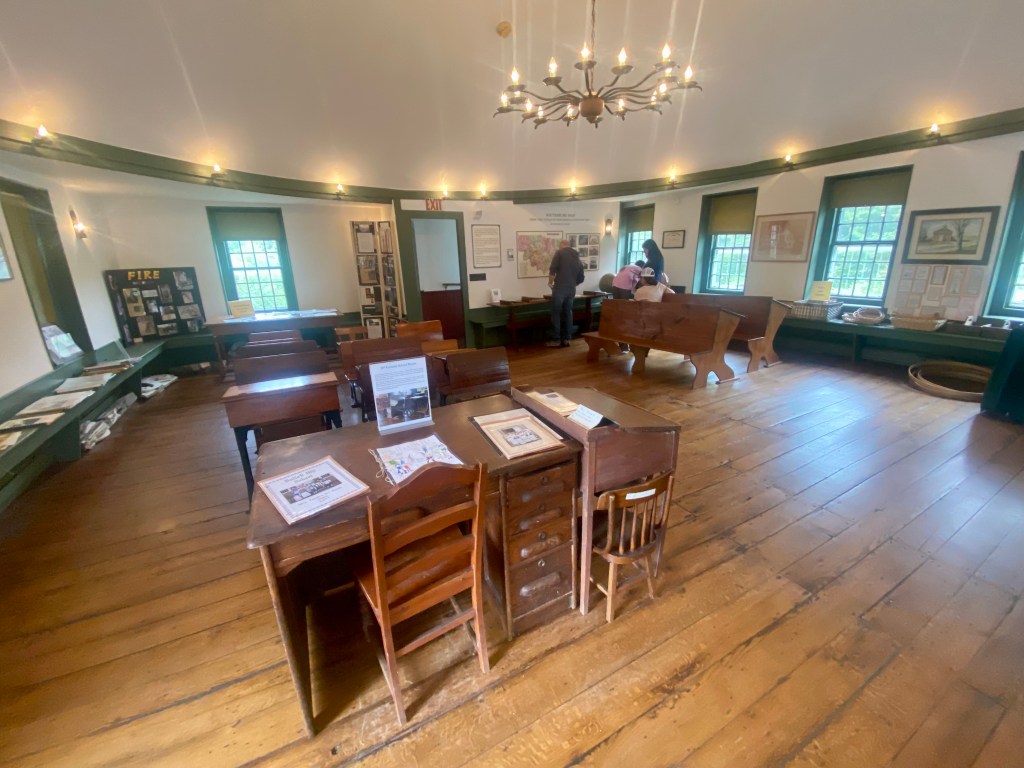
School benches and replica desks were crafted by the Heritage Village Metal and Woodworking Club; hornbooks were made by a local family, the Loiseaus; and 1850s-era clothing was provided by teachers and parents alike.
The snapshot in time of the year 1850 was chosen because it was the midway point in the life of the two-story schoolhouse building being an operational school. Originally believed to have been built in 1762, the school was in operation until December of 1941, coinciding with the opening of the Southbury Consolidated School (now Gainfield Elementary) in January of the following year.
In 1986, Gainfield Elementary School teacher Catherine Palmer helped write the curriculum that would invite students for a hands-on historical lesson while making meaningful use of the Bullet Hill School building. The first class of students arrived for the reenactment day in May of 1987.
As the founder and architect of the program, Mrs. Palmer helped train docents, created educational booklets, and produced instructional videos for schools.
She and her husband, Paul, were dedicated volunteers to the Town of Southbury, as she served as a member and Chair of the Southbury Historic Building Commission, and in 2014, authored “Historic Buildings of Southbury, Connecticut; Volumes I and II.”
Catherine Palmer passed away on October 3, 2025, at the age of 93.
More Than a Field Trip
Melinda Elliott first walked into the brick schoolhouse with her daughter on the day her elementary school class was scheduled for the Living Museum program.
The day quickly became much more than a field trip for the parent, as she said to herself, “I want to be a part of this.”
She did just that; years later, she became a docent and then was drafted onto the Bullet Hill School Board of Directors.
Since then, year after year, she awaits the bus full of students outside on the front steps of the schoolhouse, dressed in 1850s attire and ready to answer any and all of the questions thrown at her by curious students.
“I love the whole excitement of the kids. I love dressing up,” said Elliott. “Seeing their eyes light up when they suddenly realize that this was an actual thing, an actual school.”
The program is sustained entirely by volunteer effort, but with volunteership becoming harder to find, and a prospective future transition to an older fifth-grade group, there’s concern that the iconic Living Museum program won’t be the same as it has historically been.
The building is owned by the town, and the historical contents are owned by the Southbury Historical Society, of which Elliott is the President.
“We love this program, but it will no longer be the same,” she said.
Why The Change Now
The Region 15 school district recently sent correspondence to parents of second and third-grade families, explaining the reasoning behind the transition.
The district’s message reads, in part:
“Down the road, the Bullet Hill School field trip will move to fifth grade. This transition ensures better alignment with the recently revised Connecticut State Department of Education’s Social Studies Framework, which more closely matches the learning standards at the fifth-grade level. Planning for this transition will take place over time.”
Instead, second graders will visit Flanders Nature Center in Woodbury this year, an experience the district says, “supports our science unit and provides hands-on opportunities for outdoor learning.”
Region 15 Superintendent Joshua Smith tells The Record, “While I don’t know for sure which year the trip will return, I expect we will have an experience in place so that all students will be able to participate.”
He noted that current third, fourth, and fifth graders have all had the opportunity to participate in the program.
“We know that Bullet Hill is working on the town celebration and, once they are able to collaborate on the creation of the programmatic changes, our team is ready and excited to begin that work,” said Smith.
An Uncertain Future
For program organizers like Elliott, the uncertainty surrounding the timing and structure of a redesigned fifth-grade version raises practical concerns as well as emotional ones.
The Living Museum program has long depended on trained docents and specialized grade-level materials, such as 2nd grade McGuffey Readers, which were common reading texts used in the nation’s early schools.
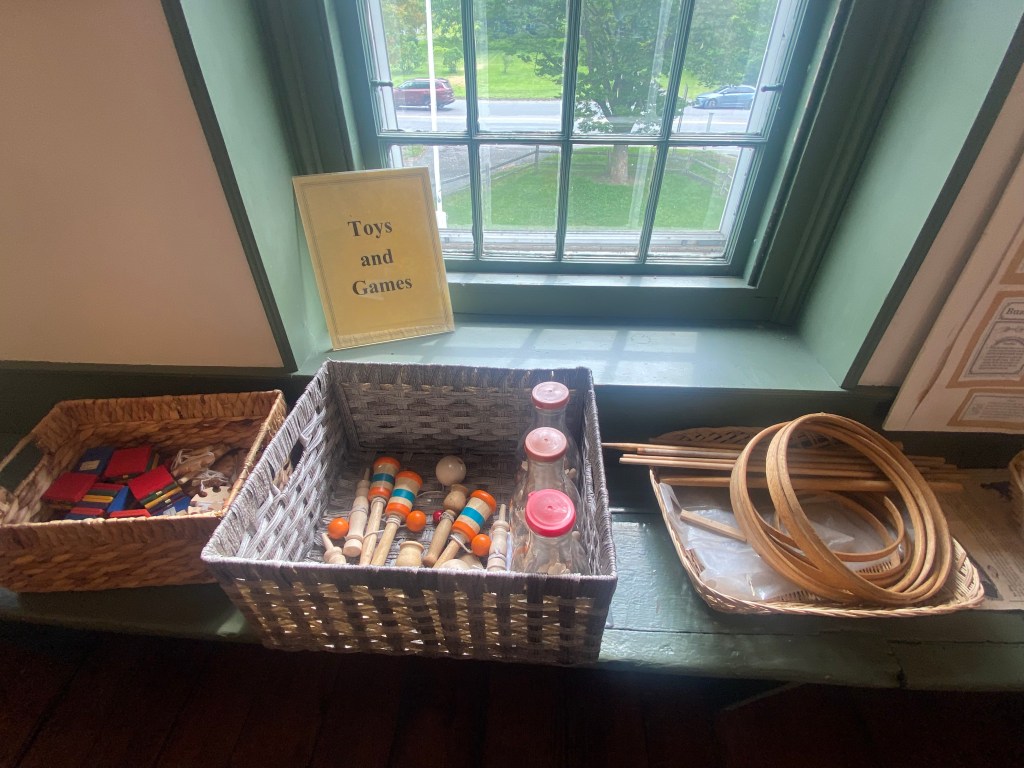
A bin full of 1850s-era toys and games, including a ball-and-cup game also known as “bibloquet”, sits on the second floor of the schoolhouse, awaiting students to experience what recess was like in that time period.
“Fifth graders aren’t going to want to play with these games,” says Elliott.
Elliott ponders, “Is it okay after 40 years to do something new? Is it the right time that we should be doing something totally different? Are we going to let the program die?”
As she approaches her own retirement, questions remain about future volunteerism and what a vision could look like going forward with the schoolhouse, which has been listed on the National Register of Historic Places since 1972.
Elliott reflects on what the program’s founder, Catherine Palmer, would think of the changes to the immersive tradition offered to students of Southbury and Middlebury, as well as other area students.
“Now her legacy has stopped. We’ve lost her legacy,” says Elliott. “It feels like we’re letting her down.”
District officials maintain that the change is intended to preserve, not eliminate, the experience by aligning it with updated curriculum standards and future programming.
A timeline for a potential transition to the fifth-grade level is still unclear at this time.
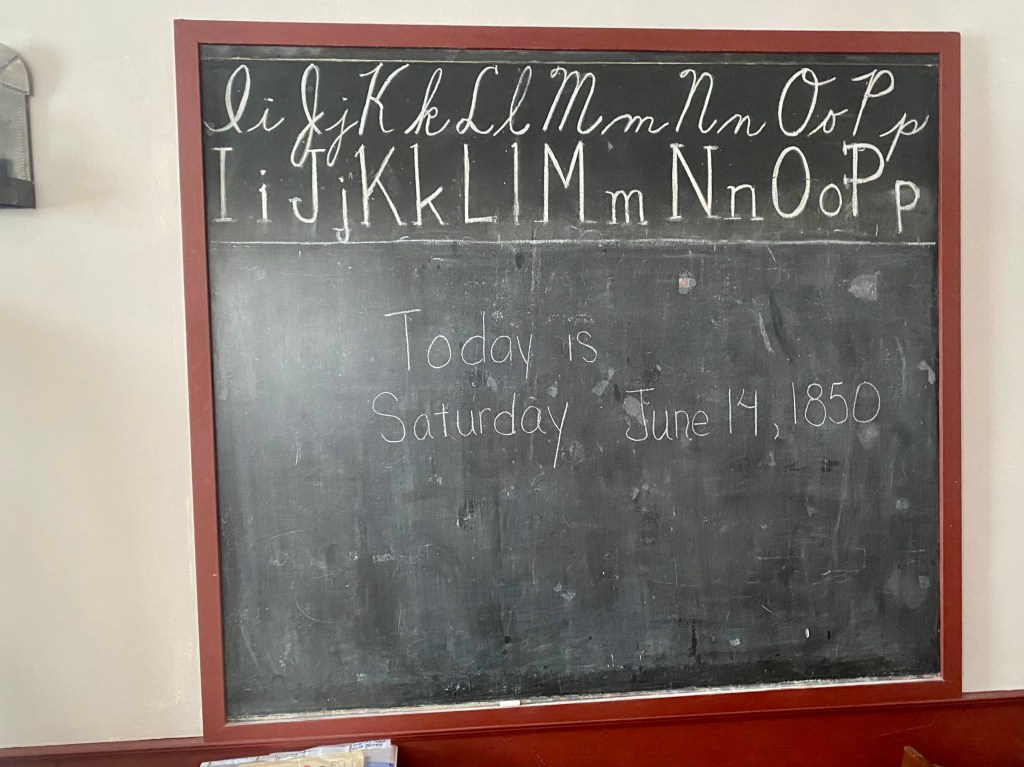
Inside the brick schoolhouse, the chalkboard still reads, “Today is Saturday, June 14, 1850.” Volunteers say they hope it will not remain a lesson frozen in time.

 The Southbury Record